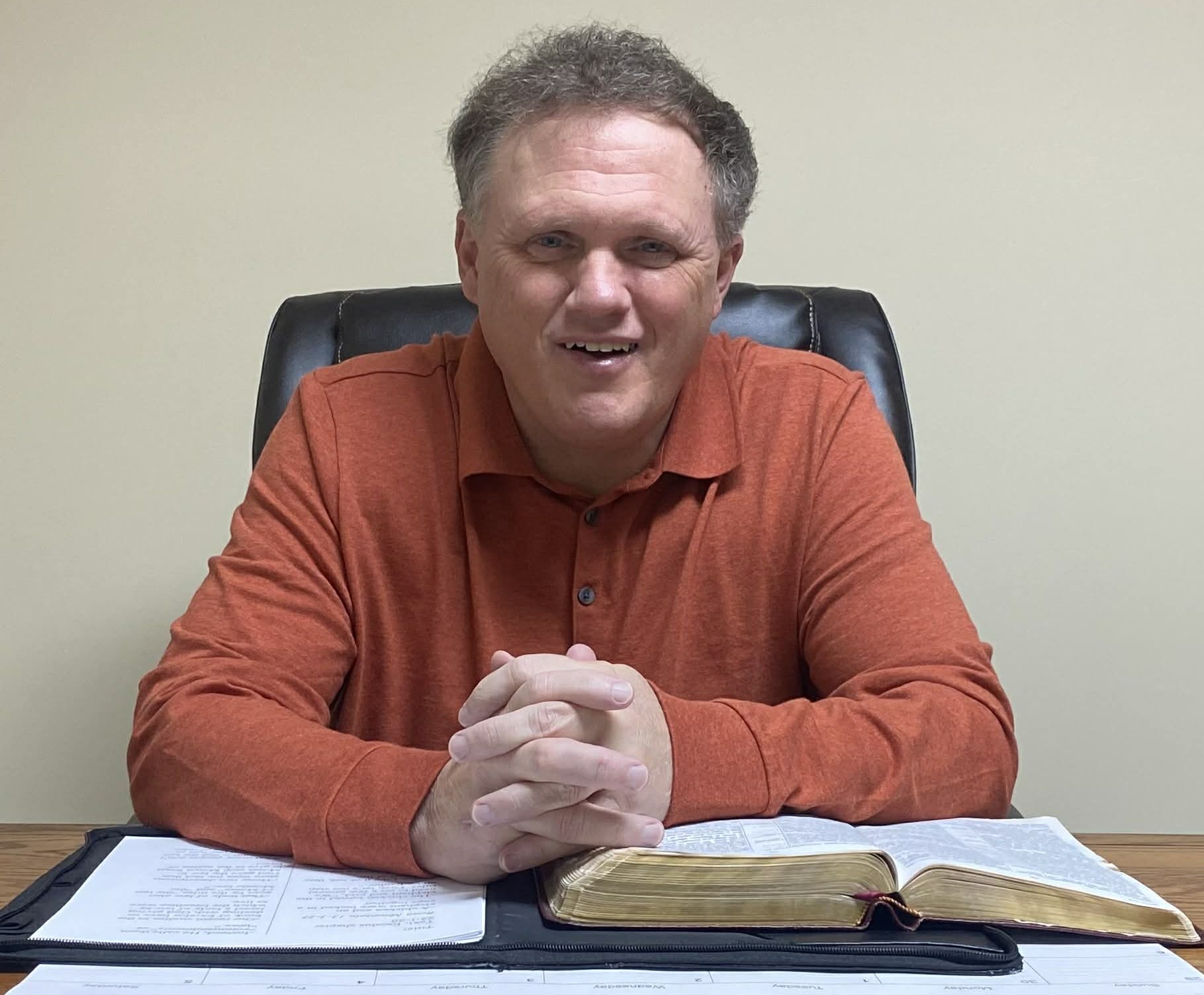
God’s Mirror

But be doers of the word, and not hearers only, deceiving yourselves. For if anyone is a hearer of the word and not a doer, he is like a man observing his natural face in a mirror; for he observes himself, goes away, and immediately forgets what kind of man he was. (James 1:22-24, N.K.J.V.)

A trader from India once asked a European trader to get him a European Bible. Knowing that the Indian trader couldn’t read English, the European asked, “What for? You wouldn’t be able to read it.” “That’s true,” said the Indian trader, “but I still want a European Bible.”

The European asked again, “Why do you want a European Bible?” This time the Indian trader answered, “When a ship brings a trader who is unknown to me and wishes to trade with me, I place my language’s translation of the Bible in front of him. If he opens it and reads it, I know that I can trust him. But if he sneers at it or throws it aside, I will have nothing to do with him because I know that I cannot trust him. So, I want to be able to use this same test for the Europeans who come to me to trade.”

Sadly, most of us know that the trader’s simple litmus test doesn’t always ring true. Some of the most devious, crooked, deceptive people in the world claim the title “Christian” and are quick to sing the praises of the Bible when it serves their purposes. Nevertheless, even with this admitted, this is not to say that the trader’s test shouldn’t ring true. What the Indian trader correctly understood was that the Bible ought to make a profound moral difference in the life of anyone who reads it.

James 1:22 commands us to be doers of the word and not hearers only. James then illustrates that command by describing a person who merely glances in a mirror and then goes about his business unchanged by what he saw (James 1:23-24). That’s the relationship some people have with the Bible. They read a few verses and then rush off to continue living the way they’ve been living rather than let what they read have a positive moral effect upon their behavior.

The contrast to such a person is the one who doesn’t just read the Bible but lives it out in everyday situations. Going back to the mirror illustration, this person is like someone who spends quality time in front of the mirror, allows the mirror to do its work of revealing any areas that need work, and then puts in the work to fix the problem areas. In this way, the Bible becomes an effective tool by which God helps us clean up our conduct. It’s one thing for you to read the Bible; it’s something else entirely for the Bible to read you.

With this in mind, I ask you, have you read something in the Bible lately that spoke to a problem area in your life? Well, if you have, did you apply what you read? You say, “No, I can’t say that I did.” Then what you are telling me is that you glanced in God’s mirror, the mirror showed you your defect, but you didn’t fix the defect. Friend, that’s not making proper use of God’s mirror, and it makes it impossible for you to bring your life in line with God’s will. Therefore, I would encourage you to revisit whatever passage you read, spend some serious time pondering it, and then apply its teachings to your situation. By doing this, you’ll make yourself a doer of God’s word rather than just a hearer of it, and you’ll let God help you make the appearance of your life better.

Posted in Bible Study, Change, Character, Discernment, God's Will, God's Word, Obedience, Personal Holiness, Scripture, The Bible | Tagged , , , | Leave a comment

The Shekinah Glory of God

In my previous post, I dealt with the name/word “Ichabod” and how it means “the glory has departed” or “there is no glory.” The “glory” in question is God’s glory, but it’s a specific type of God’s glory. The theological term for it is shekinah.

Don’t bother looking for the word shekinah in either the Old Testament’s original Hebrew or the New Testament’s original Greek because it isn’t there. It’s found in the post-Biblical writings of Jewish rabbis. They use the word to refer to God’s dwelling or abiding. Any place that God chooses to grace with His abiding presence showcases His shekinah glory.

It is fascinating to trace God’s shekinah glory throughout the pages of scripture. The first mention of God’s glory abiding within a place is found in the book of Exodus, which tells us that God’s glory was in the pillar of cloud by day and the pillar of fire by night by which God guided the Israelites as they traveled (Exodus 13:21-22; 16:10). Since God Himself was always in the pillar — whether it was a pillar of cloud or a pillar fire — it makes sense that His glory was in there.

The second mention of God’s shekinah glory is also found in the book of Exodus. In Exodus 24:16-17, we read that the glory of the Lord rested on Mount Sinai. Again, this makes perfect sense because God personally came down to the top of the mountain to meet with Moses and impart to Him the law.

Third, once Moses and the Israelites built the Tabernacle per God’s instructions, God’s shekinah glory moved into it and filled it (Exodus 29:42-46; 40:34-35). The Tabernacle was the portable tent-like complex that served as Israel’s first site of centralized national worship. It was where Israel’s priests offered up Israel’s sacrifices to God.

The Tabernacle complex was completely surrounded by a fence of white linen curtains and consisted of three distinct sections: The Outer Court, The Holy Place, and The Most Holy Place (The Holy of Holies). The Outer Court was where the bronze altar stood, the altar upon which Israel’s sacrifices were offered. The Holy Place was exclusively for the priests. The Most Holy Place (The Holy of Holies) was where The Ark of the Covenant was kept. Only the High Priest could enter that section, and even he could only do so once a year on the Day of Atonement.

Fourth, God’s shekinah glory remained in the Tabernacle until the time of the story that served as the text for my previous post. For those who didn’t read the post, that story is the one about how the Ark of the Covenant was captured by the Philistines during the days when Eli was serving as Israel’s High Priest and his two sons, Hophni and Phinehas, were serving as priests (1 Samuel chapters 2 through 4). Once the Ark of the Covenant was no longer resting inside the Tabernacle’s Holy of Holies, God’s shekinah glory left the Tabernacle.

Phinehas’ widow, as she was dying in childbirth, named her newborn son “Ichabod” (“the glory has departed”). That name symbolized the Tabernacle’s loss of God’s shekinah glory. Even when the Philistines soon returned the Ark of the Covenant to Israel (1 Samuel chapters 5 and 6), there is no mention of God’s shekinah glory returning to the Tabernacle and filling it. Perhaps it did, but perhaps it didn’t.

Fifth, the next time God’s shekinah glory is mentioned in scripture came when Solomon built the Temple to replace the Tabernacle as Israel’s site of centralized national worship. As soon as the Ark of the Covenant was brought into the Temple and placed inside the Holy of Holies, God’s shekinah filled the Temple (1 Kings 8:1-13). At this point, all was right with Israel’s worship, just as it had once been at the Tabernacle. Unfortunately, over the centuries that followed, Israel’s spiritual state again sunk to a low ebb as idolatry and sin came between the nation and God. This set the stage for the next movement of God’s shekinah glory.

Sixth, the prophet Ezekiel, in a vision, watched God’s shekinah glory depart from Solomon’s Temple in a step-by-step route (Ezekiel 10:1-22). Ezekiel first watched as God’s glory lifted up from between two literal cherub angels (Ezekiel 10:4). The symbolism of this lifting up centers around the fact that on each end of the Ark of the Covenant’s lid (which was called The Mercy Seat) were two fashioned cherub angels whose wings were spread out to cover the lid. Between the wings of those two fashioned angels was where God met with Israel (Exodus 25:17-22; 2 Kings 19:15; Isaiah 37:16). Therefore, what Ezekiel saw in his vision symbolized God’s glory lifting up from off the lid of The Ark of the Covenant.

Ezekiel watched as God’s shekinah glory lifted up from between the cherub angels and then paused over the threshold of the Temple for a while, as if God was waiting to see if the people would repent and return to Him (Ezekiel 10:4). Then the shekinah glory departed from the Temple’s threshold and was lifted up, along with the literal cherub angels, out of Jerusalem (Ezekiel 10:18-19; 11:22-23). The obvious symbolism is that God’s shekinah glory had now departed from Solomon’s Temple and the city of Jerusalem. This departing took place during the lead up to the Babylonians conquering Jerusalem and destroying the Temple.

After the Babylonian’s destruction of Solomon’s Temple, the people of Israel ultimately built another Temple to replace Solomon’s original (Ezra chapters 1 through 6). Despite the fact that this Second Temple was not nearly as grand or beautiful as Solomon’s had been (Ezra 3:12), God was pleased with it and accepted the worship that took place there. It is significant, however, that the Bible never mentions the shekinah glory of God abiding within or filling that Second Temple. Perhaps not coincidentally, the Bible never mentions The Ark of the Covenant being inside that Temple. The whereabouts of the Ark have remained unknown since the Babylonian destruction of the Temple.

Israel’s Second Temple actually stood longer than Solomon’s had and remained unchanged for centuries until the Romans conquered Jerusalem and installed Herod the Great as the ruler of the city and the surrounding territories. Herod was a prolific builder, and he oversaw a major expansion and renovation of the Second Temple in an effort to make it as impressive as Solomon’s had been. This Temple, often referred to as Herod’s Temple, is the one that is spoken of in the New Testament. Again, though, there is never any mention in scripture of God’s shekinah glory abiding within or filling that second Temple either before or after Herod’s renovation work.

Still, this shouldn’t be taken to mean that God didn’t honor that Temple. Jesus actually called that Temple “My Father’s house” (John 2:16) and “My house” (Matthew 21:13). Therefore, the point is not that the Second Temple was illegitimate in the eyes of God. It wasn’t. The point is that the Bible makes no specific reference to either The Ark of the Covenant or the shekinah glory of God ever being inside that Temple.

Seventh, where the shekinah (abiding) presence of God first shows up in New Testament is found in Matthew 1:23. There, the angel Gabriel quotes a Messianic prophecy from Isaiah 7:14 in saying of Jesus, “Behold, the virgin shall be with child, and bear a Son, and they shall call His name Immanuel.” The verse then points out that Immanuel means “God with us.” You see, as long as Jesus was with us on planet earth, there was no need for the shekinah glory of God in the Jewish Temple. As John 1:14 describes the situation:

And the Word became flesh and dwelt among us, and we beheld His glory, the glory as of the only begotten of the Father, full of grace and truth. (N.K.J.V.)

And now, with all this in mind, we come to the question of where God’s shekinah glory currently abides in this world. Is there such a place? Absolutely!

After Jesus’ death, burial, resurrection, and ascension back to heaven, He kept His promise to send God the Holy Spirit to indwell the body of each saved believer (John 14:26-27; Acts 1:4-8; Romans 8:9-11; Ephesians 1:13-14). What this means is that each Christian’s body is now God’s “temple,” the place in which God dwells and abides in this world (1 Corinthians 6:19-20; 2 Corinthians 6:14-16). Because of this the Christian should honor God with what he does with his body, puts in his body, or puts on his body. To do anything less is to defile God’s temple. Remember Christian, with every breath you take you are carrying on an ancient tradition of God’s abiding presence. That is an awesome responsibility, and it’s one that you dare not take lightly.

Posted in Angels, Bible Study, Christ's Birth, God's Holiness, Holiness, Scripture, The Ark of the Covenant, The Bible, Worship | Tagged , , , | 6 Comments

Ichabod

Ichabod is an odd name. When you mention it, the average person’s mind goes to Ichabod Crane, the schoolmaster character in Washington Irving’s famous short story The Legend of Sleep Hollow. Students of the Bible, however, know that the name actually has a Biblical origin. The birth of the Bible’s Ichabod is recorded as part of the sordid story of Eli, Hophni, and Phinehas, and it’s one of the saddest tales in scripture.

In the days when the prophet Samuel was young, Israel’s high priest was a man named Eli. Eli was almost 100 years old (1 Samuel 4:15), obese (1 Samuel 4:18), and virtually blind (1 Samuel 4:15). Because of his physical condition, he delegated to his two sons the responsibility of sacrificing the offerings the people of Israel brought to the Tabernacle (Israel’s site of centralized national worship). Those two sons were named Hophni and Phinehas.

Unfortunately for all Israel, Hophni and Phinehas were spiritually lost unbelievers (1 Samuel 2:12) whose wickedness was evidenced in not only the unholy way in which they conducted their priestly duties (1 Samuel 2:13-17) but also in the rank sexual sin that marked their lives (1 Samuel 2:22). How bad were the two men? They were so bad that the Bible actually says the Lord desired to kill them (1 Samuel 2:25).

Their deaths came by way of a battle with the Philistines. As priests, Hophni and Phinehas carried Israel’s Ark of the Covenant into the battle, the idea being that Israel’s army couldn’t possibly lose as long as it had the Ark in the ranks. But that idea proved to be thoroughly false as the Philistines won a resounding victory in which Hophni, Phinehas, and 30,000 Israelite soldiers lost their lives (1 Samuel 4:10-11). As for the Ark, the Philistines captured it and took it to Philistia.

When all this tragic news reached Eli, he fell off his seat backward and died by means of a broken neck (1 Samuel 4:18). It is at this point that the story turns its attention to Eli’s daughter-in-law, who was the wife of Phinehas. She was far along with a pregnancy on that fateful day, and the news of all the happenings caused her to go into a hard labor (1 Samuel 4:19-20). She was able to give birth to a son, but she died as a result of the delivery. Just before she died, she named the boy “Ichabod” and said, “The glory has departed from Israel, for the Ark has been captured” (1 Samuel 4:21-22). Ichabod, you see, means “the glory has departed” or “there is no glory.”

The Bible’s only other reference to the man Ichabod comes years later when Saul was reigning as Israel’s first king. By that time Ichabod had grown up and was himself serving as a priest (1 Samuel 14:1-3). Other than that single reference, though, we know nothing about the actual person. Perhaps that’s why the name itself has become more well known than the man who originally bore it.

In regards to how the name is used today,”Ichabod” has come to symbolize any situation in which God’s glory has departed. The name is most often used in reference to a church or a denomination that has abandoned its Biblical moorings in favor of liberalism and worldliness, but it can be applied to any circumstance that reeks of a lack of God’s presence. And if you are looking for a classic tell-tale sign of an “Ichabod” circumstance, look for a circumstance that is operating without God’s word, in direct contrast to God’s word, or completely outside of God’s word. Remember, God’s presence and God’s word always walk hand in hand. Therefore, if God’s word isn’t part of a situation, it stands to reason that God isn’t part of that situation.

Posted in Backsliding, Church, Coming Judgment, Discernment, Disobedience, God's Wrath, God's Judgment, God's Word, Problems, Rebellion, Scripture, Sin | Tagged , , , , | Leave a comment

What Would You Give Up for Jesus?

One day a certain ruler, probably a ruler in a local synagogue, came to Jesus with a question. This ruler was young (Matthew 19:20), wealthy (Matthew 19:22), and lived a moral life by striving to keep God’s commandments (Matthew 19:17-20). Still, even with all that going for him, he wanted to make certain that he had the “eternal life” box checked off on his life’s to-do list. So, his question to Jesus was, “Good Teacher, what good thing shall I do that I may have eternal life?” (Matthew 19:16, N.K.J.V.).

Jesus responded by first attempting to get the young man to think more deeply about Jesus’ Messiahship and divinity. The young man had called Jesus “Good Master,” but did he truly believe that Jesus was actually God in the flesh? As Jesus said to him, “Why do you call Me good? No one is good but One, that is God” (Matthew 19:17, N.K.J.V.).

Interestingly, though, Jesus didn’t even wait for a response. Instead, He forged right ahead and answered the young man’s question by saying, “But if you want to enter into life, keep the commandments” (Matthew 19:17, N.K.J.V.). Now the young man’s curiosity was really piqued. He quickly asked, “Which ones?” (Matthew 19:18, N.K.J.V.). Jesus then listed a smattering of the multitude of commandments from the Old Testament law: you shall not murder (Exodus 20:13), you shall not commit adultery (Exodus 20:14), you shall not steal (Exodus 20:15), you shall not bear false witness (Exodus 20:16), honor your father and mother (Exodus 20:12), and love your neighbor as yourself (Leviticus 19:18).

Confidently, the young man asserted, “All these things I have kept from my youth” (Matthew 19:20, N.K.J.V.). Did he truly think that his track record was spotless or was he just bragging? The tone of the story suggests that he truly thought his record was spotless. Either way, he then asked Jesus, “What do I still lack?” (Matthew 19:20, N.K.J.V.).

At that point Jesus didn’t rebuke the young man or say to him, “Uh, no, you haven’t always kept those commandments.” What He did was keep the conversation moving by saying, “If you want to be perfect, go, sell what you have and give to the poor, and you will have treasure in heaven; and come, follow Me” (Matthew 19:21, N.K.J.V.). This, as the story soon proves, is the harpoon that Jesus had been loading up since the onset of the conversation.

And oh how that harpoon struck deep into the heart of that young man. Once it landed, he had no more response, no more comebacks, no more questions. The next verse simply says:

But when the young man heard that saying, he went away sorrowful, for he had great possessions. (Matthew 19:22, N.K.J.V.)

So much for loving your neighbor as you love yourself! The New Testament doesn’t revisit this story to tell us what became of the young man, which leaves us to wonder if he ever did what Jesus asked of him. (I’ve never heard or read anybody who thought that he did.) What we can say for sure, though, is that Jesus’ command certainly knocked the smugness and overconfidence out of the fellow.

What I want to draw your attention to, however, is the primary lesson this story presents. That lesson is: You will never be the follower of Jesus that He wants you to be as long as anything or anyone stands taller than Him in your life. I’m sure that it wasn’t an oversight that Jesus, in His conversation with the ruler, didn’t list the first of the ten commandments that began the Old Testament law and served as its moral center. That first commandment was: “You shall have no other gods before Me” (Exodus 20:3, N.K.J.V.). It seems clear that the ruler was worshiping his wealth and possessions. Jesus, of course, always knows what’s really going on with us and what is standing between us and full devotion to Him.

Looking at the young man’s life another way, we can say that not only was his wealth his god, it also gave him his identity. Here, it will help us to remember that the Jews of that day believed that God blessed the righteous by granting them worldly wealth. In the Jewish way of thinking, a wealthy person must be a godly person and a poor person must be cursed of God. Well, since the young ruler thought of himself as someone who kept God’s commandments, it made perfect sense to him that he was wealthy. But what if he lost all his wealth? That would surely be a major blow to his identity.

Let me ask you a very personal question: What is it about you that most gives you your identity? Phrasing the question another way, what are you known for? Okay, whatever it is, are you willing to give it up for Jesus if He asks you to? That’s a question that drags each of us out into the deepest waters of dying to self.

Will the businessman abandon the business world if Jesus asks him to? Will the registered nurse quit being a nurse? Will the athlete give up sports? Will the pastor forego the ministry? Will the writer stop writing? Will the school teacher resign? Will the salesman stop selling? Will the chef stop preparing meals? Will the politician get out of politics? Will the policeman quit the force? Will the fireman quit the company? Will the musician give up music? Will the artist give up art?

Someone might argue, “But Jesus would never ask for such a sacrifice.” Oh really? Tell that to James, John, Peter, and Andrew, four men who gave up their fishing profession to follow Jesus. Tell it to Matthew, who gave up his job as a tax collector. Tell it to Saul of Tarsus, who abandoned his identity as a zealous Jew who persecuted Christians when Jesus floored him with the question, “Saul, Saul, why are you persecuting Me?” And tell it to the rich young ruler whom Jesus asked to sell all his possessions and give the proceeds to the poor. Each of these examples offers vivid proof that Jesus does sometimes ask for such a sacrifice.

So, you say that you love Jesus and will do anything and everything that He asks of you? Well, if your assessment of yourself is accurate, good for you. I sincerely hope that your tribe increases. But then again, could it be that Jesus just hasn’t hit you with the right harpoon yet by asking you to give up that one thing from which you draw your identity, that thing that makes you you? I’ll leave that for you to ponder the next time you start thinking of yourself as being such a radically devoted follower of Jesus. For the record, it’s a question that I myself must ponder, and I’ll admit that there are times when I’m not so confident in my answer.

Posted in Brokenness, Business, Change, Choices, Commitment, Decisions, Desires, Discipleship, Dying To Self, Faithfulness, God's Will, Greed, Idolatry, Individuality, Money, Obedience, Politics, Priorities, Prosperity, Sacrifice, Service, Sports, Stewardship, Submission | Tagged , , , | Leave a comment

Two Times When God Blessed Lying (post 2 of 2)

The Jews, led by Joshua, were at last ready to cross over the Jordan river and start claiming Canaan, the land that God had given them. The problem was that various races of people had been entrenched in that land for centuries and had no plans to relinquish it. This meant that warfare was inevitable. If the Jews wanted to possess their land and settle it they would have to take it through battle.

The greatest test for Israel’s army would be the first one: the city of Jericho, with its massively thick wall surrounding it. To make preparations for the battle, Joshua sent two men to spy out the city. After making their way into the city, the spies hid out in the house of a prostitute named Rahab (Joshua 2:1). This was good cover because, as sordid as it might sound, two men visiting a woman of ill repute wouldn’t create much suspicion. Furthermore, Rahab’s house was located literally on top of a section of Jericho’s wall (Joshua 2:15). That location would make for a quick getaway if the spies were discovered.

As it turned out, the hideout came in very handy. Somehow Jericho’s king got word that two Jewish spies had entered the city and were at Rahab’s house (Joshua 2:2-3). So, the king sent messengers to Rahab demanding that she bring out the men. Rahab, however, hid the men atop the roof of her house (Joshua 2:6). When the king’s messengers asked her about the men, she said, “Yes, they were here, but I didn’t know they were spies, and they left at dark as the gate into the city was being shut for the night. I don’t know where they went once they left the city, but you should be able to catch them if you go after them (Joshua 2:4-5).

Once the messengers were gone, Rahab said to the two spies, “Since I have shown you kindness, please spare my life as well as the lives of my father, my mother, my brothers, and my sisters when you conquer this city (Joshua 2:12-13). The spies agreed to the request on the condition that Rahab and her family would keep their secret until after God had given Israel the victory (Joshua 2:14). Rahab then used a rope to let the men escape down the wall beneath her house (Joshua 2:15). She also advised them to hide in the local mountains for three days until the king’s searchers gave up on finding them (Joshua 2:16).

Famously, the sign that would let Israel’s soldiers know to spare Rahab’s family would be a scarlet cord hung in the window from which Rahab had lowered the spies down the wall (Joshua 2:17). Rahab was to bring her entire family inside her house. As long as they were there, they would be spared (Joshua 2:18-21). All of this, of course, played out per the agreement. As for how Rahab’s house wasn’t destroyed when God brought down Jericho’s wall (Joshua 6:20), there are different explanations. Probably the best one is that the section of the wall that God brought down was specifically the section that held the city gate. In other words, God might not have leveled the walls in total. Perhaps He left standing the small section where Rahab’s house was located.

But now let’s get back to Rahab’s boldfaced lie. Unlike the story of Shiphrah and Puah (Exodus 1:15-21), where there might be a possibility that those two women didn’t actually lie, there is no doubt whatsoever that Rahab told a big one. Still, despite her lie — to say nothing of her profession — the Bible sings her praises. Hebrews 11:31 says of her:

By faith the harlot Rahab did not perish with those who did not believe, when she received the spies with peace. (N.K.J.V.)

Similarly, James 2:25 says of her:

Likewise, was not Rahab the harlot also justified by works when she received the messengers and sent them out another way? (N.K.J.V.)

Okay, so what are we to do with this in light of the following passages (all from the N.K.J.V.)?:

  • These six things the Lord hates, Yes, seven are an abomination to Him: A proud look, A lying tongue… (Proverbs 6:16-17)
  • Lying lips are an abomination to the Lord, But those who deal truthfully are His delight. (Proverbs 12:22)
  • A false witness will not go unpunished, And he who speaks lies shall perish. (Proverbs 19:9)
  • Therefore, putting away lying, “Let each one of you speak truth with his neighbor,” for we are members of one another. (Ephesians 4:25)
  •  Do not lie to one another, since you have put off the old man with his deeds, and have put on the new man who is renewed in knowledge according to the image of Him who created him… (Colossians 3:9-10)

The best way to understand the story of Rahab is to say that God blessed the woman’s actions rather than her words, just as He had previously done with the actions of Shiphrah and Puah. Whatever else we might say about Rahab, she had full faith that Israel’s God was going to win the victory over Jericho. She even told those spies, “…the Lord your God, He is God in heaven above and on earth beneath” (Joshua 2:11, N.K.J.V.). Frankly, she had more faith than some of the Jews did. You don’t get listed in the “hall of faith” in the book of Hebrews if you don’t have an uncommon level of faith in the true and living God (Hebrews 11:31).

The hard, cold fact of the matter is that even though God is very much against lying, He oftentimes has to hit a straight lick with a crooked stick if He wants to get anything done in this world. Therefore, in the cases of Shiphrah, Puah, and Rahab, He chose to focus on the greater good that allowed His will to get done rather than the less-than-ideal details of how that good came to pass. What would be really fascinating to know is how God would have accomplished His will in both situations if all three women hadn’t lied. Unfortunately, that is information we don’t have.

In conclusion, as I bring this post and this two-part study to a close, the takeaway from these two stories is not that the ends always justifies the means or that God winks at the sin of lying. There are far too many other passages and stories that disprove both notions. The takeaway is that God is a merciful God who understands inner motives, not just outer deeds. You see, if you think about it, the lies of Shiphrah, Puah, and Rahab weren’t spoken to cover their sins, attain wealth, or prevent God’s will from happening. They were spoken to save lives and to bring God’s will to pass. God places great value upon each of those motivations

Lastly, another takeaway is that God is great enough to not be restricted by His own moral standards when He wants to get something done. This is how He was able to bless the polygamous marriages of the Old Testament era and use the offspring from those marriages in His plans and purposes. It’s also how He was able to use and bless other less-than-perfect individuals such as Samson, David, Peter, the woman at the well, Zacchaeus, and Saul of Tarsus. For that matter, He even used idol-worshiping rulers such as Babylon’s Nebuchadnezzar and Persia’s Cyrus the Great to accomplish His purposes. All of these examples show us that God can use (even bless) anybody He chooses, and that includes lying women who have good intentions. This doesn’t give any of us a get-out-jail-free card to lie, but it at least helps us to understand God and His written word a little better.

Posted in Lying | Tagged , , , , | Leave a comment

Two Times When God Blessed Lying (post 1 of 2)

Egypt’s new Pharaoh was dealing with what he believed was a national crisis. Years earlier, a race of non-Egyptians — Jews to be precise — had settled in Egypt and had since multiplied so prolifically that they had become a threat to national security (Exodus 1:7). Pharaoh’s fear was that if an enemy nation went to war against Egypt, the Jews would align themselves with the enemy and in so doing make Egypt easy pickings (Exodus 1:9-10). While the Jews had showcased no evidence that they would do such a thing, the freshly minted Pharaoh wasn’t about to take any chances.

His plan was to make the Jews the slaves of Egypt and use them as free labor to build two new supply cities in Egypt. To force the Jews to do the work, Pharaoh appointed cruel taskmasters to oversee the labor (Exodus 1:11). In his way of thinking, this plan would accomplish two important goals. First and foremost, if the Jews worked hard all day they would be too tired at night to have sexual relations, and that would curtail their population increase. Second, it would get a couple of needed cities built.

A funny thing happened, though, with the plan. The more the Egyptians afflicted the Jews and made them work, the more the Jews multiplied (Exodus 1:12). And with each new Jewish baby that was born, the dread of the Jews settled in more heavily upon the Pharaoh and his fellow Egyptians (Exodus 1:13). So, Pharaoh had his taskmasters inflict even more cruelty upon the Jews by  forcing them to do all manner of menial jobs, particularly anything having to do with making bricks, making mortar, and laying bricks (Exodus 1:13-14). To the Jews, the work was akin to living inside an iron furnace (Deuteronomy 4:20).

In addition to the increased workload, Pharaoh also met with Shiphrah and Puah, the two Jewish midwives who oversaw the Jewish group of midwives. Pharaoh’s command to Shiphrah and Puah was simple. If a Jewish woman gave birth to a daughter, the child could live, but if the woman gave birth to a son, the son was to be killed (Exodus 1:15-16). Despite the fact that Pharaoh’s plan, if carried out to the letter, would eventually result in no Jewish males for the work force, he figured that was a price worth paying if it capped the population of the Jews.

But did Shiphrah and Puah and all the other Jewish midwives carry out the plan? The answer is found in Exodus 1:17:

But the midwives feared God, and did not do as the king of Egypt commanded them, but saved the male children alive. (N.K.J.V.)

As you might expect, it didn’t take Pharaoh long to figure out that there were some new Jewish baby boys in Egypt, and so he summonsed Shiphrah and Puah and demanded an explanation (Exodus 1:18). And how did they answer him? Exodus 1:19 tells us:

And the midwives said to Pharaoh, “Because the Hebrew women are not like the Egyptian women; for they are lively and give birth before the midwives come to them.” (N.K.J.V.)

Okay, you Bible scholars, does this response from Shiphrah and Puah amount to a lie? Before you answer, perhaps I’d better point out that the next verse, Exodus 1:20, says:

Therefore God dealt well with the midwives, and the people multiplied and grew very mighty. (N.K.J.V.)

Keep in mind now that we are dealing with the same God who would later strike Ananias and Sapphira dead for lying about their sale of a certain possession and their subsequent donation of the proceeds to the early church (Acts 5:1-11). So what do we do with this answer from Shiphrah and Puah? Well, generally speaking, there are only two possibilities. They are:

  1. Shiphrah and Puah didn’t lie because God supernaturally saw to it that the Jewish mothers gave quick births that allowed the mothers time to hide their baby boys before the midwives even arrived on the scene.
  2. Shiphrah and Puah did lie, but God blessed them for their actions (i.e., not killing the male babies) rather than their words. Putting it another way, He blessed them because they obeyed Him rather than Pharaoh (Acts 5:29).

While the temptation is to conservatively err on the side of caution by believing that Shiphrah and Puah didn’t lie, there is another Biblical story that seems to contradict that interpretation. I say this because in that second story God clearly blesses the telling of a definite lie. That’s the story that we will look at in the next post, and so I’ll ask you to please stay tuned until then. Oh, and in the meantime, I’ll also ask you to please forego the telling of any lies. (lol)

Posted in Lying | Tagged , , | Leave a comment

Did Jesus Believe the Opening Chapters of Genesis?

I can’t think of any section of the Bible that is as doubted, maligned, and ridiculed as the opening chapters of Genesis. There are even some professing Christians who claim to love Jesus while doing interpretative backflips around the straightforward storyline presented by these chapters. How the critics scoff at the notions of:

  • a Creator God
  • a creation week of seven literal days
  • an original man and woman who served as the parents of the entire human race
  • a talking serpent
  • Cain killing Abel
  • a worldwide flood
  • one family saved aboard an ark

But here’s a question that someone needs to ask all these doubters, particularly the “Christian” doubters: “What did Jesus believe and teach about the opening chapters of Genesis?” Frankly, that answer would surprise a lot of people.

First, Jesus believed and taught that Adam and Eve were real people and that they actually were the parents of the entire human race. When the Pharisees asked Him if it is lawful for a man to divorce his wife for any reason, Jesus began His answer by taking them all the way back to the origin of the institution of marriage. He asked them, “Have you not read that He who made them at the beginning made them male and female…?” (Matthew 19:4, N.K.J.V.). Obviously, Jesus didn’t promote the ludicrous theory of evolution in regards to the origin of the human race. To the contrary, He said that God created the male and the female.

Second, Jesus believed and taught that God created Adam and Eve at the beginning of creation. Read His opening question to those Pharisees again. Notice that He says that God made Adam and Eve “at the beginning.” Clearly, He is referring to the beginning of creation. Mark’s account of the conversation makes this point even more obvious. That account quotes Jesus as saying, “But from the beginning of the creation, God made them male and female” (Mark 10:6, N.K.J.V.). Boy, somebody should have told Jesus that the earth is billions of years old and that Adam and Eve, if they existed at all, didn’t come along until a few million years ago!

Third, Jesus believed and taught that God created creation. Any honest reading of His opening words to those Pharisees can produce no other conclusion. Jesus talks about God and creation in the same breath, and He certainly doesn’t use the term “big bang.” You say you need more proof? Okay, read Mark 13:19, which is another quote from Jesus. There He says of the coming tribulation period, “For in those days there will be tribulation, such as has not been since the beginning of the creation which God created until this time, nor shall ever be” (N.K.J.V.). That can’t be much simpler to understand, can it?

Fourth, Jesus believed and taught that not only did the serpent talk but that Satan was the one who caused it to talk. In John 8:44, Jesus calls Satan “the father of lies” (N.I.V.). Why did Jesus call him that? He did it because Satan told the first lie that ever got told in all of creation. And what was that lie? It was the lie that Satan, speaking through the serpent, told Eve when he said of her and Adam eating the forbidden fruit, “You will not surely die” (Genesis 3:4, N.K.J.V.). For the record, Jesus also believed that Satan had fallen from heaven. In Luke 10:18, He says, “I saw Satan fall like lightning from heaven” (N.K.J.V.).

Fifth, Jesus believed and taught that not only is the story of Cain and Abel real, it occurred not long from the beginning of creation. In Luke 11:49-51, Jesus says, “Therefore the wisdom of God also said, ‘I will send them prophets and apostles, and some of them they will kill and persecute, that the blood of all the prophets which was shed from the foundation of the world may be required of this generation, from the blood of Abel to the blood of Zechariah…” (N.K.J.V.). Also notice here that Jesus implies that there was no difference between the beginning of creation and the formation of the earth. Both occurred on day one of the creation week. Again, that cuts against every grain of what modern scientists arrogantly assert about the origins of the universe and the earth.

Sixth, Jesus believed and taught the story of the worldwide flood/Noah/the ark. In Matthew 24:37-39, He makes a point of using that story to teach the unexpectedness of His Second Coming. He says, “But as the days of Noah were, so also will the coming of the Son of Man be. For as in the days before the flood, they were eating and drinking, marrying and giving in marriage, until the day that Noah entered the ark, and did not know until the flood came and took them all away, so also will the coming of the Son of Man be” (N.K.J.V.).

In light of all these quotes from Jesus, perhaps one final quote from Him should be conveyed to anyone who claims to know Him as Savior but still doubts the veracity of the opening chapters of Genesis. In John 5:46-47, Jesus says to a group of unbelieving Jews, “For if you believed Moses, you would believe Me; for he wrote about Me. But if you do not believe his writings, how will you believe My words?” (N.K.J.V.). You might be saying, “Okay, so what were the writings of Moses?” Oh, you know them. They are the first five books of the Bible: Genesis, Exodus, Leviticus, Numbers, and Deuteronomy. You see, the book of Genesis, complete with its incredible opening chapters, leads off that list. And so, with that in mind, I guess the only real question left to ask right now is, “Do you believe?”

Posted in Belief, Bible Study, Christ's Return, Creation, God's Word, Scripture, The Bible, Truth | Tagged , , , , , | 2 Comments

How to Kill Worry

He who dwells in the secret place of the Most High Shall abide under the shadow of the Almighty. (Psalm 91:1, N.K.J.V.)

Clovis Chappell, the great Methodist preacher, once told the following story:

In the early days of aviation, a pilot was attempting to make an around-the-world flight. At one point, a couple of hours since his previous stop for refueling, the pilot heard a strange noise in his plane. After listening to the noise for a little while, he determined that it sounded like the gnawing of a rat. He quickly concluded that a rat must have climbed aboard the plane during the last fuel stop.

Thoughts of impending doom immediately entered the pilot’s mind as he envisioned the rat gnawing through some cable that was vital to him controlling the plane. But what was to be done? That last landing spot was two hours behind him and the next one was two hours ahead of him. No matter which one he tried to make, it was a two-hour trip and the rat could have completed its damage by then.

Worry filled the pilot’s every breath until he happened to remember that rats are rodents. Rodents, of course, are creatures of the ground and the underground. They are not made for heights. So the pilot began to climb his plane higher and higher into the sky. Up, up, up he went until the sound of the rodent finally stopped. Two hours later the pilot landed for his next refueling and found the dead rat.

Chappell concluded his story with some beautiful words of application, and I’ll offer those words as the close to this brief post and trust you to put them to good use in your life. He said:

Brothers and sisters in Christ, worry is a rodent. It cannot live in the secret place of the Most High. It cannot breathe in the atmosphere made vital by prayer and familiarity with the Scripture. Worry dies when we ascend to the Lord through prayer and His word.

Posted in Bible Study, Comfort, Encouragement, Fear, Problems, Trials, Trusting In God, Worry | Tagged , , , | Leave a comment

Some Closing Facts About Christ’s Kingdom

Series: “Christ’s Kingdom” (post #6, last one)

First, I want to remind you that in the last days there will be scoffers who will laugh at the truth and do every evil thing they desire. This will be their argument: “Jesus promised to come back, did he? Then where is he? Why, as far back as anyone can remember, everything has remained exactly the same since the world was first created.” (2 Peter 3:3-4, New Living Translation)

Picture a large group of Christ’s followers, 120 or so (Acts 1:15), standing upon the Mount of Olives just outside Jerusalem. It has been forty days since Christ’s resurrection (Acts 1:1-3) and Jesus, in His resurrected/glorified body, is making one final appearance to them in the moments just before He ascends back to heaven. With the exception of John, who will see Jesus one more time as part of his Revelation experience (Revelation 1:9-16), none of these people will ever see Jesus again until they get to heaven.

As part of this last-minute conversation, Jesus tells the group to remain in Jerusalem until they are baptized with the Holy Spirit. He promises that this baptism will happen very soon (Acts 1:4-5). Then they ask Him if He is on the verge of fulfilling the Old Testament prophecies about the Messiah establishing a glorious kingdom age for Israel. In response, He tells them that only God the Father knows when that will take place (Acts 1:6-7). Lastly, He tells them that after they have been empowered by being baptized with the Holy Spirit, they will be His witnesses to the whole world (Acts 1:8).

Following these words, Jesus is taken up into the sky and disappears into a cloud (Acts 1:9). So there the group stands, gazing up at the sky in wide-eyed wonder, when suddenly two men (presumably angels) in white garments appear in their presence and say, “Men of Galilee, why do you stand gazing up into heaven? This same Jesus, who was taken up from you into heaven, will so come in like manner as you saw Him go into heaven” (Acts 1:10-11, N.K.J.V.).

We know from the New Testament writings that the people of that group never forgot that promise. For example, the apostle John was in that group, and he would later write: “Behold, He is coming with clouds, and every eye shall see Him…” (Revelation 1:7, N.K.J.V.). Likewise, the apostle Peter, in our text verse, rebuked any and all naysayers who questioned the promise that Jesus would return to this earth again.

You see, the Bible is crystal clear that Jesus must return to planet earth at some point. Scripture leaves no ambiguity about this. If Jesus doesn’t return to this earth, He is a liar and the Bible is false. There’s no other way of understanding the situation.

I’m mentioning all this because what you need to know is that in concert with Christ’s Second Coming will be the establishing of His kingdom on this earth. In the previous post from this series, I explained that Jesus is slated to rule upon the earth for 1,000 years. What a millennium that will be! If you want to learn more about all the details of that age, please read my post What Will Life Be Like in Christ’s Millennial Reign?  However, I won’t rehash that boatload of information here because I want to finish up this series by explaining what becomes of Christ’s kingdom following His millennial reign.

At the conclusion of Christ’s thousand-year reign, Satan and all the other fallen angels will be released from their imprisonment in the bottomless pit (Revelation 20:7). They will have been imprisoned in there for the duration of the millennial reign. Upon his release, Satan will immediately start causing worldwide trouble again.

As usual, he will head out to deceive the inhabitants of the earth, and as usual he will be wildly successful in doing so (Revelation 20:8). But who will his deception victims be this go around? Well, if you understand the millennial reign correctly, you know that there is only one possible group of candidates. These people will be the offspring of the saved believers who lived all the way through the tribulation period and entered into the kingdom age in their earthly bodies.

As I pointed out in the previous post, at the beginning of Christ’s kingdom age a great dividing will take place among the world’s living population. Those who will have taken the mark of the Antichrist during the tribulation period — and in so doing will have assured their eternal damnation — will be put to death. In this way, their presence will be removed from the kingdom age and their souls will be banished to hell.

On the other hand, those who will have become saved believers during the tribulation period will be welcomed into Christ’s kingdom on earth. They will even be healed of their infirmities and granted the luxury of being able to live to extended ages during the millennium. They will rebuild the ruins from the tribulation period, build new houses, plant vineyards, and produce children (lots of children).

The fact is, though, that these tribulation-period survivors will have bodies that will still bear the curse of Adamic sin. This will ensure that each of them will at some point die over the course of the 1,000 years. Presumably, at the moment of death, each body will be resurrected and glorified to match the glorified bodies of all the other “kingdom citizen” believers from all the other eras of human history. This will leave only their children, grandchildren, great-grandchildren, great-great grandchildren, etc. in earthly bodies that still have the nature of sin coursing through them.

This is why we say that these “kingdom kids” (that’s my term for them) will be Satan’s last victims of deception as he will convince millions of them to side with him in one final revolt against Jesus. How many of these “kingdom kids” will choose to side with Satan? John describes their number as being “as the sand of the sea” (Revelation 20:8). You see, just as Adam and Eve chose sin while living in a perfect world, these “kingdom kids” will choose sin after spending their entire lives living under Christ’s reign on earth.

Satan will then march his new army of followers to Jerusalem, where Jesus will have been ruling for the duration of His millennial reign. Satan and his millions of new followers will surround the city completely in a type of siege maneuver, and it will look like yet another great battle will be about to occur in Jerusalem. But then suddenly, without warning, God the Father will send fire down from heaven, and the fire will devour Satan’s entire army (Revelation 20:9). Satan and all of the other fallen angels will then be cast into the eternal lake of fire (Gehenna, in the Greek language), where the Antichrist and the false prophet will have spent the previous 1,000 years, having been cast in there following the Battle of Armageddon that ended the tribulation period (Revelation 20:10; Matthew 25:41).

At this point the only unfinished business left regarding all of history’s lost people will be their joining Satan, the other fallen angels, the Antichrist, and the false prophet in the eternal lake of fire (Gehenna). Jesus will take care of that unfinished business at The Great White Throne Judgment (Revelation 20:11-15). For this judgment, the body of every lost person who ever lived will be resurrected from wherever it lies. Jesus referred to this type of resurrection — not one to glorification — as “the resurrection of condemnation” (John 5:29). Also, the lost soul that inhabited that body will be called forth from hell (Hades, in the Greek language) as the resurrected body and the eternally damned soul are reunited to stand before Jesus and be formally sentenced to spend eternity in the eternal lake of fire (Gehenna).

Now let’s get back to the subject of Christ’s kingdom. Following The Great White Throne Judgment, God will institute a new earth, a new heaven, and a new Jerusalem (Revelation 21:1). I tend to side with those prophecy experts who believe that this “new” earth will actually be this current earth cleansed and purged by fire, but there are many students of the Bible who contend that this current earth will be completely obliterated and a thoroughly brand new one created. Whichever interpretation is correct, what we can say with certainty is that this current earth will pass away “by fire” (2 Peter 3:10-11) and there won’t be any sea in the new one (Revelation 21:1)

As for the New Jerusalem, that will without doubt be a whole new deal. This city will come down out of heaven and become the eternal home of all of history’s saved people. The Bible devotes its closing two chapters to the description of this city, and if you are a Christian you should study those chapters well. After all, that city is going to be your home forever.

But how does Christ’s kingdom fit into the New Jerusalem? The answer is simple: Christ’s kingdom will be eternally merged into the New Jerusalem. This will be the ultimate fulfillment of the angel Gabriel’s words to the virgin Mary concerning Jesus. Those words were:

“And He will reign over the house of Jacob forever, and of His kingdom there will be no end.” (Luke 1:33, N,K.J.V.)

It will also be the ultimate fulfillment of a prophecy that Daniel once gave when he wrote:

…the God of heaven will set up a kingdom which shall never be destroyed; and the kingdom shall not be left to other people; it shall break in pieces and consume all these kingdoms, and it shall stand forever. (Daniel 2:44, N.K.J.V.)

And so now let’s bring this post and this series to a close by summing up the basics about Christ’s kingdom. Here’s the list and I offer it as my closing thoughts on this whole subject. Ready? Here goes:

  1. Jesus has a kingdom.
  2. Right now His kingdom is a heavenly one, not an earthly one.
  3. Satan currently has a kingdom, too. It’s a world system that he has established within the confines of God’s planet earth.
  4. To become a member of Satan’s kingdom, all a person has to do is be born.
  5. To become a member of Christ’s kingdom, all a person has to do is believe in Jesus as Savior. By doing this, the person’s citizenship is transferred from Satan’s kingdom to Christ’s kingdom.
  6. When Jesus walked this earth, He brought a touch of His kingdom to everywhere He went and everything He did.
  7. Now that Jesus is no longer walking the earth, He expects His followers (Christians, citizens of His kingdom) to bring a touch of His kingdom to every place we go and everything we do. One of the surest ways we can do this is to live according to the principles set forth in Christ’s Sermon on the Mount.
  8. At the close of the seven-year tribulation period that is prophesied to come upon the earth, Jesus will return to walk this earth again. At that time He will establish His kingdom on the earth and reign from Jerusalem for the 1,000 years of His millennial reign (kingdom age).
  9. At the completion of Christ’s millennial reign, Satan will mount one last offensive against Jesus in an attempt to reestablish his kingdom upon the earth. However, God the Father will easily put down Satan’s offensive.
  10. Following Satan’s last offensive and the subsequent Great White Throne Judgment that immediately follows it, Christ’s earthly kingdom will merged into the eternal era of the new earth, the new heaven, and the city of New Jerusalem.
Posted in Angels, Christ's Second Coming, Christ's Return, Coming Judgment, Death, Demons, Eternity, God's Sovereignty, Heaven, Hell, Prophecy, Rebellion, Resurrection, Satan, Series: "Christ's Kingdom", Sin, Spiritual Warfare, The Devil | Tagged , , , , , , , | Leave a comment

When Jesus Finally Establishes His Kingdom Upon the Earth

Series: “Christ’s Kingdom” (post #5)

“This, then, is how you should pray: ‘Our Father in heaven, hallowed be your name, your kingdom come, your will be done on earth as it is in heaven.'” (Matthew 6:9-10, N.I.V.)

This quote from Jesus is a part of the so-called “Lord’s Prayer,” which should more correctly be called “the model prayer.” In the prayer, Jesus lists certain spiritual principles (building blocks, foundational elements) that ought to be a regular, systematic part of the prayer life of the Christian (the “kingdom citizen”). It’s not that we should recite the exact words of the model prayer verbatim, as people so often do. The point is that we should frequently talk to God the Father about these things when we pray. And, interestingly, one of the spiritual principles that Jesus includes is the request for God the Father’s kingdom to come.

Obviously, since God the Father and God the Son are one (John 10:30; 14:7-11), God the Father’s kingdom is the same kingdom, Christ’s kingdom, that we’ve been dealing with in this series. Therefore, Jesus wants Christians to keep bombarding God the Father’s heavenly request box with the request, “Bring your heavenly kingdom down to planet earth.” By regularly making this request, we Christians not only obey Jesus’ teaching concerning prayer but also keep ourselves reminded that there really is coming a time when God’s will is going to start getting done on this earth the same way it is currently getting done in heaven.

When will this time be? Revelation 20:4-6 speaks of a era when Christ’s followers will reign with Him for 1,000 years. This same promise, without the citing of the exact number of years, is also made in Revelation 2:26-27. Actually, God’s promise of a glorious kingdom age was first made to the nation of Israel. The scores of Old Testament prophecies in which God promises Israel that a Messiah will one day lead them into a idyllic era in which a revitalized Jerusalem will serve as the capital city of a revitalized earth are too numerous to list. If you know your New Testament, you know that this “kingdom age” is what Christ’s chosen 12 apostles kept looking for Him to establish during His earthly ministry.

I should mention that there are some who attempt to downplay the literalness of the 1,000 years of Revelation 20:4-6 by interpreting the years as being merely symbolic of a period of time of unspecified length. Those who hold to this interpretation cite Psalm 90:4 and 2 Peter 3:8 — two verses which describe how a thousand years are as one day with God — as proof texts. At first glance, this interpretation seems to make sense.

However, the interpretation comes up lacking upon closer inspection of The Revelation as a whole. I say that because despite the fact that some parts of the book do involve symbolic language, the book frequently uses specific numbers that are plainly meant to be understood literally. Even a cursory reading of the book proves this.

For example, Jesus speaks to 7 specific churches — not to some unknown number of churches — in Revelation chapters 2 and 3. In Revelation 5:1, the scroll that He takes from the hand of God the Father has 7 specific seals, 7 seals that are chronologically opened in Revelation 6:1-17 and 8:1. In Revelation 7:1-8, 144,000 Jews (12,000 from each of the 12 tribes of Israel) are chosen. In Revelation 21:9-21, the eternal city of New Jerusalem is described by means of highly specific numbers. The city’s wall is 144 cubits. The wall features 12 gates: 3 on the east, 3 on the north, 3 on the south, and 3 on the west. The wall is also anchored with 12 foundations. As for the city itself, it is laid out in a square that is 12,000 furlongs in length, breadth, and height. These are just a few of the many, many instances where The Revelation uses specific numbers very literally.

One passage that showcases both the symbolic language and the literal language of the book is Revelation 13:1-10. In those verses, the “beast rising up out of the sea” is symbolic language for the world ruler known as the Antichrist. But what does the passage say about how long the Antichrist will be granted authority to speak? It says that he will be granted that authority for 42 months. If God wanted to convey that the Antichrist will be granted authority to speak for a unspecified duration of time, He surely wouldn’t have listed the number of months as 42. The number 40 would have worked better for symbolism.

In light of all this, it seems clear that we should interpret the number 1,000 in Revelation 20:4-6 to mean just that: 10 centuries.  Because the Latin word mille means “a thousand” and the Latin word annus means “year,” Christ’s 1,000 year reign upon this earth is often referred to as “the millennial reign.” It is also commonly called “the kingdom age.”

Jesus will usher in this age as part of His Second Coming when He returns to this earth and walks it again. His Second Coming will end the seven-year period of tribulation that is prophesied to come upon planet earth. Christ’s Second Coming is most vividly described in Revelation 19:11-21, a passage that explains how He will end the tribulation period’s final, climactic battle (the Battle of Armageddon) by slaying all of the soldiers of all the armies involved and casting the Antichrist (the beast) and his right-hand man (the false prophet) into the eternal lake of fire. Following this resounding victory, three things will take place. They are:

  1. Satan and all the other fallen angels will be imprisoned in a place called “the bottomless pit” for 1,000 years (Revelation 20:1-3; Isaiah 24:21-22). After all, you can’t very well have Christ’s kingdom upon the earth if you’ve still got Satan and his army of fallen angels running around causing trouble.
  2. Concerning all the people who lived through the tribulation period, Jesus will send out angels to divide them up into the categories of “saved” and “lost” (Matthew 24:29-31, 36-44; 25:31-33). The “saved” (the “elect,” the “sheep”) will be welcomed into Christ’s kingdom on earth (Matthew 24:45-47; 25:34). Conversely, the “lost” will be put to death and thus removed from the earth altogether (Matthew 13:47-50; Matthew 24:48-51; 25:30-40; 25-41-46; Luke 19:11-27; 2 Thessalonians 1:7-9).
  3. The bodies of certain groups of saved people will be resurrected, glorified, and reunited with the souls that once inhabited them. Those groups will be:
  • the saved believers (Adam, Eve, Noah, Abraham, David, Jeremiah, etc.) from the Old Testament age (Daniel 12:1-3)
  • the saved believers (Simeon, Anna, John the Baptist, etc.), from the pre-church New Testament age
  • the people who become saved believers during the tribulation period and either die or get martyred (Revelation 20:4-6)

There is much more to say about Christ’s 1,000 year reign upon the earth, and I’ll say a bit more about it in my next post. For now, though, let me wind up this post by going back to my introduction. The main thing to understand about Christ’s 1,000 year reign is that it will at last be the fulfillment of the untold number of instances in which Christians have prayed to God the Father, “Your kingdom come, your will be done, on earth as it is in heaven.” You see, Christ’s 1,000 year reign is the great merging of heaven and earth. It is when Jesus will be able to rightly say, “My kingdom is of this world” rather than, “My kingdom is not of this world” (John 18:36). And speaking for myself as a Christian who is already a full-fledged citizen of that kingdom, I look forward to this time with great anticipation.

Posted in Angels, Christ's Second Coming, Coming Judgment, Demons, Election, God's Timing, God's Judgment, Heaven, Prayer, Prayer Requests, Prophecy, Resurrection, Reward, Satan, Series: "Christ's Kingdom", Spiritual Warfare, The Devil | Tagged , , , , , | 2 Comments