“Christian Verses” Podcast: 1 Corinthians 9:22

The apostle Paul said, “I have become all things to all people, so that I may by all means save some” (H.C.S.B.). Perhaps Paul had Jesus in mind when he wrote those words because Jesus certainly modeled that incredible adaptability in his one-on-one ministering to others. In this week’s podcast, Malcolm and I discuss how the modern church faces the tall challenge of reaching a younger generation that lives and breathes with smart phones in hand and isn’t particularly enamored with any religion, particularly Christianity. How do we reach such a generation with the gospel? Unfortunately, judging by recent polling trends in church attendance, we aren’t doing a very good job of answering that question. You can play the podcast by clicking on the link below:

https://soundcloud.com/user-185243867/reaching-the-next-generationcv2019004

Posted in "Christian Verses" podcast, Church, Current Events, Evangelism, God's Work, Witnessing | Tagged | Leave a comment

New Seasons

To everything there is a season, A time for every purpose under heaven: (Ecclesiastes 3:1, N.K.J.V.)

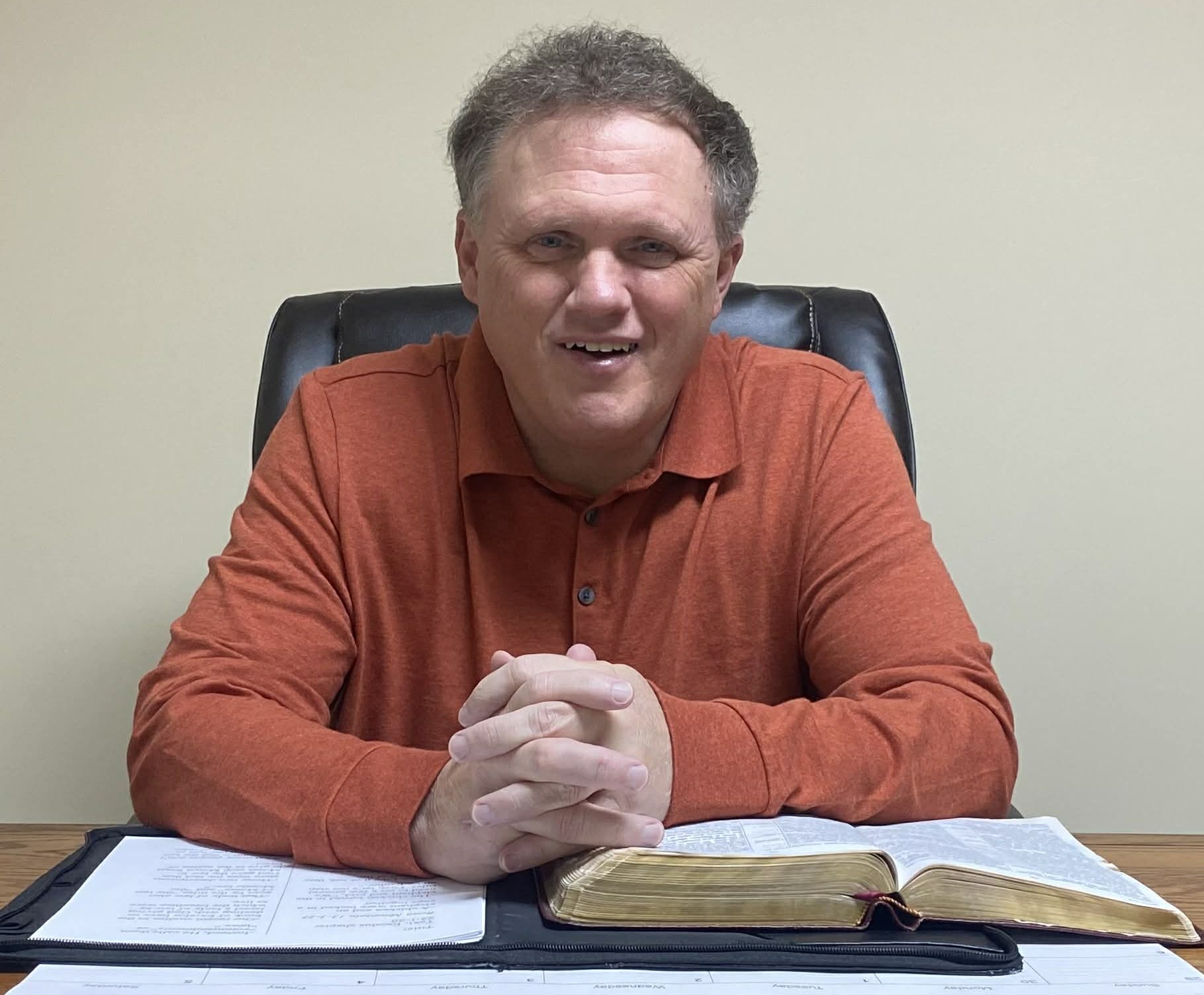
It’s been quite a while since I provided any kind of update as to what’s going on with me and my family. So, I thought I’d use this post to do that. I’m calling the post “New Seasons” because our little family has certainly moved into some new seasons in recent days.

First, I am now the pastor of Roan Mountain Baptist Church in Bakersville, NC. My final Sunday at Oak Grove Baptist in Nebo, NC was the last Sunday in June, and my first Sunday at Roan Mountain Baptist was the first Sunday in July. The drive to church is a lot shorter, 15 minutes as compared to the 40 minutes I was doing to Oak Grove. Roan Mountain is also the largest church, in regards to not only the size of the building but also the number of people, that I have ever had the privilege to pastor. It’s the oldest church in Mitchell county, having been established in 1813. That’s pre-Civil War.

Second, Malcolm Woody and I have started doing the “Christian Verses” podcast again. For those of you who don’t know what a podcast is, it’s just Malcolm and I having a conversation about a chosen subject. Each subject comes out of a singular focal verse — hence the title “Christian Verses” — that Malcolm reads to get the conversation started. Some of you might recall that we did about 25 of these podcasts last year and then went on a long hiatus. We weren’t sure we would ever pick back up with the ministry, but that’s the direction in which the Lord has recently burdened us. The only difference this time around is the fact that we are going to keep each podcast to around 10 minutes in length. (Some of our earlier ones clocked in at upwards of 30 minutes.) If you are interested in listening to the podcasts, you can access them through this blog site. Just click on the “Categories” section and then click on the heading “Christian Verses” podcast. There you will find the links to all of them.

Third, my wife Tonya has begun another year of teaching math at Bowman Middle School in Bakersville, NC. These days she’s teaching 7th graders. Since this is either her 28th or 29th year at the school (we’ve been debating the exact number), it’s hard to call it a new season for her. I guess you could say that her new season is being the pastor’s wife at Roan Mountain Baptist Church. Any new church always brings different opportunities and challenges for not only the pastor but also his wife.

Fourth, Ryan, our oldest, has been hired as the Physical Education teacher at Harris Middle School in Spruce Pine, NC. He graduated from Johnson University (Knoxville, Tenn.) this past May with a B.S. degree in Physical Education (K-12) and spent the summer working at The Bark House, a tree-bark processing place in Spruce Pine. He was scheduled to return to Johnson this fall and do the five months of student teaching required to earn his state teaching license in Tennessee, but the job came open at Harris Middle and he was fortunate enough to get it. So now he’s working full time, helping coach the middle school football team, and working toward earning his bus driver’s license. As for his teacher’s license, he’s going to start in East Carolina University’s residency program this coming spring and earn his license that way. That program takes about a year to complete and requires six online classes, but it will get him officially licensed to teach in North Carolina. Also, he gets to keep working his new job without missing a beat.

Fifth, Royce, our youngest, has begun his freshman year at Mayland Community College in Spruce Pine, NC. His plan is to get all of his General Education courses completed at Mayland and then transfer to a four-year school to finish out his Bachelor’s degree. Right now he’s working on the assumption that he will ultimately major in Criminal Justice, but I wouldn’t call that written in stone yet. He also isn’t sure which four-year school he will enroll in when he’s through at Mayland, but there’s no rush on these decisions. Oh, and he also just recently started working as a bagger/cashier at the Ingles Supermarket less than a mile from our house. You might say that he’s entering into not one but two new seasons.

Well, I guess that’s about it for now. (That’s enough anyway, right?) Please accept my personal thanks for reading this blog, and I trust the site is a blessing and a help to you. If our family ever comes to your mind, prayers are always appreciated. I’m convinced that we are currently where we are supposed to be and doing what we are supposed to be doing, but it takes constant discernment and obedience to stay in God’s will. After all, life keeps coming, doesn’t it? And it keeps changing, too. For our family, the past couple of months have brought a lot of those changes, but each change has been God’s way of opening a door to a good place. Now it’s up to us to make the most of the opportunities that He has given us.

Posted in Change, Current Events, God's Will, Personal | Tagged , , , , , , | Leave a comment

Wandering Around

In his daily devotional book, The Believer’s Code, O.S. Hawkins offers an excellent word about sheep. He writes:

Have you ever been to a circus? If so, you probably saw an array of trained animals. Huge elephants can be trained to stand on their back legs atop tiny stools. Monkeys can be trained to ride bicycles. Lions can be trained to jump through rings of fire. But have you ever seen a trained sheep? No. Why? Because sheep are not that smart. Sheep cannot be trained to do anything. They tend to just wander around. Focused as they are on the ground — on food — they walk with their heads down and frequently get lost. No wonder the prophet says, “All we like sheep have gone astray (Isaiah 53:6).

I especially agree with the assessment that we, like sheep, tend to just wander around. Are there truly evil people in this world? Absolutely. But there are far more people who are just out there wandering around. When it comes time for work, they wander to their place of employment. When the workday is finished, they wander back home. When they need groceries, they wander to the grocery store. When they need clothes, they wander to the mall. When they want to eat out, they wander to the restaurant. When they have an off day or some spare time, they wander to the site of something they like to do. When it is time for a vacation, they wander to the beach or the mountains.

No praying goes into any of these wanderings. God’s will isn’t sought concerning anything. The only “afterlife” these folks think about is retirement, which consists of all the imagined things they will do when they don’t have to work anymore. Ask any one of these people, “What is your purpose in being on this earth?” and you won’t get much of an answer. They just go about their business, day in and day out, like sheep with their heads down, each of them focusing only upon the next blade of grass.

The contrast to such a life is a life like David lived. In Acts 13:36, the Bible says that he “served his own generation by the will of God” (N.K.J.V.). Wow, what a concept, serving your generation, and doing it according to God’s will! Some people want to serve, but they want to pick their own area of service. Other people claim to want God’s will done, but those claims never translate into genuine commitment. David, however, had both sides of the issue covered. Not only did he serve his generation, he did it in the places and in the ways that God had planned for him.

Of course we know that David wasn’t perfect. His affair with Bathsheba and subsequent murder of Uriah prove that conclusively. Still, though, when it came time for God to write the epitaph on David’s scriptural tombstone, He wrote, “He served his own generation by the will of God.”

That’s a pretty lofty word of praise, certainly not one that a dumb sheep could achieve by just wandering its way through life. And the great news is that you can have that same epitaph written on your tombstone, little sheep, if you will come under the shepherding of the Good Shepherd, Jesus Christ, and seek His will in all matters. Why keep wandering aimlessly through life when Jesus offers you direction, guidance, and purpose (to say nothing of rewards in eternity)? So if you have never embraced Him as Savior and Shepherd, let me encourage you to do so right now. And if you have, take a moment to lift up your head and ask, “Jesus, am I truly serving my generation by your will?”

Posted in Commitment, Decisions, Desires, Discipleship, Dying To Self, Eternity, God's Will, God's Work, Good Works, Heaven, Human Life, Ministry, Sacrifice, Service, Submission | Tagged , , , , , | Leave a comment

Identifying Your Spiritual Gift (Gifts)

Series: “Spiritual Gifts” (post #4)

Just about every time I preach on the subject of spiritual gifts, some sincere Christian will ask me, “But how can I know what my spiritual gift is?” Each time I hear that question I find myself wishing there was a Bible passage to which I could point the person and say, “Just study that chapter and you’ll find your answer.” The reality is, though, there is no such chapter. Truth be told, identifying which spiritual gift (gifts) you have isn’t so much an examination of the Bible as it is an examination of yourself. It is with this in mind that I’d like to offer five practical suggestions that will help you with the process.

#1: You should begin by learning which spiritual gifts the Bible names and which ones are still offered to Christians today. While it’s true that identifying your spiritual gift (gifts) is more an examination of yourself than an examination of the Bible, this doesn’t mean that you should leave the Bible out of the equation. To the contrary, you won’t have a clue which spiritual gifts are even potentially available to you as a Christian unless you consult the Bible and learn what it has to say on the subject. To help you with that, I would encourage you to read the previous two posts from this series if you haven’t already done so.

#2: You should make a list of the spiritual gifts that you KNOW you DON’T have and let that be a starting point for your self discovery. As you read over the Bible’s list of potential spiritual gifts, there will be some that will stand out as red flags to you. For example, if the very thought of you having to put together a plan to bring organization to a chaotic situation causes you to recoil, you can bank on the fact that you don’t have the spiritual gift of administrations/governments. You see, the gifts upon which you need to focus your attention are the ones for which you have an interest or at least a possible interest.

#3: You should try different areas of service to Christ and see which ones you do well. Do you have the gift of evangelism? The way to find out is to try your hand at evangelizing and see if you win anybody to Christ. Do you have the gift of leading/ruling? The way to find out is to try your hand at leading and see if anybody follows you. Do you have the spiritual gift of giving? The way to find out is to contribute abundantly to a church offering and see how losing that money makes you feel. You get the idea. A good way to identify your spiritual gift (gifts) is to employ the trial-and-error approach. Take a chance. Step out of your comfort zone. Try something new, and see how it goes. You never know what you’ll find out about yourself.

#4: You should ask other Christians who know you best what they feel your spiritual gift (gifts) might be. Fellow Christians can be invaluable resources in helping you identify which spiritual gift (gifts) you have. Because they’ve already seen not only your strengths but also your weaknesses on display, they can provide an accurate assessment of you. All you need from them is blunt honesty regarding your abilities.

#5: You should keep in mind that your spiritual gift will ring your “inner bell.” When you find yourself doing something that requires your spiritual gift to be put into operation, you’ll instinctively sense it deep down inside you. Even if the work itself is difficult in its requirements, it won’t be drudgery to you. Instead, it will produce a sense of joy, happiness, and contentment. You’ll feel like you are doing something you were put on this earth to do, and you’ll do it well. Those are God’s ways of ringing your “inner bell.”

Well, I hope these five simple tips help. Please don’t think that you identifying your spiritual gift (gifts) is some insurmountable task that you’ll never achieve. Just know that God will surely help you as you make your way through the process. Why wouldn’t He? It is, after all, to His benefit that you put your spiritual gift (gifts) into action. Since we’ve got far too many gifted Christians sitting on the sidelines already, there’s certainly nothing to be gained from God keeping you in the dark about your gift (gifts).

Posted in God's Work, Individuality, Ministry, Series: "Spiritual Gifts", Service, Spiritual Gifts | Tagged , , | Leave a comment

“Christian Verses” Podcast: Isaiah 46:4

Malcolm Woody and I stepped away from doing our “Christian Verses” podcast for a while, but recently we’ve been in prayer and discussion about picking back up with the endeavor. So, we recorded one this past Friday as something of a promotion for Malcolm’s upcoming devotional series, “Tracks.” This podcast is a short one (under 8 minutes long), and the focal verse for it is Isaiah 46:4. That’s a verse in which God promises to carry His people even through our gray hair and our old age. Here’s the link:

https://soundcloud.com/user-185243867/god-carries-uscv2019003

Posted in "Christian Verses" podcast, God's Omnipresence, Uncategorized | Tagged , , , | Leave a comment

Are All the Spiritual Gifts Still Given?

Series: “Spiritual Gifts” (post #3)

Does God still impart all 20 of the spiritual gifts that are named in the Bible Unfortunately, the answer you get depends upon whom you ask. As for me, my answer is no. And in this post I’ll offer my reasons for that answer.

Let me start with the gifts of apostleship and prophesying (prophecy). The New Testament describes these as gifts that were foundational to the early church. Ephesians 2:19-20 illustrates this truth by calling the early Christians “the household of God.” The passage then says that the foundation of that household came from the apostles and the prophets, with Jesus, of course, serving as the chief cornerstone for the whole building. What all this means is that in the years before the completion of the writing of the New Testament, Christians with the spiritual gifts of apostleship and prophesying (prophecy) were vital.

As I mentioned in the previous post, prophesying is not the same thing as preaching. While preaching amounts to saying some things about God’s written word, prophesying is speaking new words that come directly from God. In the early church, the indwelling Holy Spirit imparted this spiritual gift to selected men and selected women. For example, Acts 13:1 tells us there were prophets in the church of Antioch, and Acts 21:9 says that Philip the evangelist had four virgins daughters who were prophetesses.

But isn’t the gift of prophesying (prophecy) still needed today? Not so much. You see, we now have the completed New Testament to consult. I’m not saying that getting a never-before-heard, fresh word from God by way of a modern-day prophet or prophetess wouldn’t be helpful. I’m simply saying that now that the foundation has long been laid for the church, the crying need for such a ministry is no longer there. After all, a foundation only gets laid once.

Likewise, we can place the gift of apostleship in the same category. Here, the New Testament case against the modern imparting of this gift is even stronger. I say this because the New Testament names two highly specific qualifications for an apostle, qualifications that are such that no man or woman today has them on a resume. Those two qualifications are:

  • must have been an eyewitness of the fact that Jesus resurrected (Acts 1:21-22)
  • must have been able to perform “the signs (miracles) of an apostle” (Acts 2:43; 2 Corinthians 12:12)

Furthermore, Mathew 19:28 and Revelation 21:14 both speak of the apostles as being a closed group of 12 in the future. There is a debate as to whether Paul or Matthias (Acts 1:15-26) will take the place of Judas Iscariot in the 12, but there is no debate about “the 12” being a unique group. As evidence of this, when James became the first of them to die, no election was held to name a replacement for him (Acts 12:1-2).

With all this said, are there men and women today who claim to have the gifts of prophesying (prophecy) and apostleship? Yes, there are. Christian circles are filled with them in the ranks of the Pentecostal and Charismatic groups. But are these men and women legitimate prophets/prophetesses and apostles in the New Testament sense? In my opinion, they aren’t. Again, the New Testament specifically describes these two spiritual gifts as being foundational to the church age (Ephesians 2:19:20), and that foundation got set in place a long time ago.

Now let’s move on and talk about the gifts (plural) of healings and the working of miracles. Both of these gifts were important for the work of legitimizing Christianity and were given to the apostles (Acts 3:1-11; 5:1-16; 8:5-13; 9:32-43; 19:11-12; 20:6-12; 2 Corinthians 12:12) to enable each apostle to perform “the signs (miracles) of an apostle.” Therefore, it stands to reason that if the Holy Spirit no longer imparts the gift of apostleship, He no longer imparts the gifts of healings and the working of miracles, either. Despite the grandiose claims of some preachers on television, it is obvious that God is no longer doing all the things that are mentioned in the book of Acts, the book that provides the record of the early days of the church age. It’s not that God can’t still do all those things; it’s just that He doesn’t.

Finally, it is doubtful that the Holy Spirit still imparts the gifts of speaking in tongues and the interpretation of tongues. According to the New Testament, speaking in tongues was no more or no less than the ability to speak in an unlearned foreign language (Acts 2:1-12). Similarly, the interpretation of tongues was no more or no less than the ability to interpret an unlearned foreign language.

As for the church services today that claim to display the gift of speaking in tongues and sometimes even the interpretation of those tongues, those services violate the Bible’s most basic rules for speaking in tongues in church. This includes the rule that the tongues be unlearned foreign languages rather than being mere babble or gibberish (Acts 2:1-12). It also includes the rule that women be forbidden to speak in tongues in a church service (1 Corinthians 14:34-35). So, while it’s true that the apostle Paul spoke in tongues often (1 Corinthians 14:18) and warned against making the practice forbidden (1 Corinthians 14:39), the reality is that he wouldn’t recognize what passes for the gift in today’s church services. It’s like comparing apples to oranges.

Posted in Church, God's Work, Prophecy, Series: "Spiritual Gifts", Service, Speaking in Tongues, Spiritual Gifts | Tagged , , , , , , , , | Leave a comment

What Spiritual Gifts Does the Bible Name?

Series: “Spiritual Gifts” (post #2)

To find out what spiritual gifts the Bible names, you have to consult three separate passages of scripture. The passages are Romans 12:6-8, 1 Corinthians 12:8-30, and Ephesians 4:7-16. By combining the lists from all three passages, we come up with 20 named spiritual gifts. Interestingly, the Ephesians passage and certain portions of the 1 Corinthians passage focus upon the Christians who actually have the gift rather than naming the gift itself. For example, “evangelists” obviously refers to Christians who have the spiritual gift of evangelism.

This post will list and briefly define all 20 of the spiritual gifts and provide the passage in which each gift is found. There is no particular order to the list. For many of the gifts, I’ll provide multiple names. These different names are a reflection of the different ways in which our English translations describe the gift.

  1. evangelism (Ephesians 4:11): This gift is the special ability to effectively tell others about Jesus Christ and their need of the salvation offered in Him. Christians with this gift enjoy sharing the gospel with unbelievers and do it with zeal. They lead many people to saving belief in Christ.
  2. ministry, ministration, service, serving, serving others (Romans 12:7): This gift is the special ability to personally minister to others by serving them. Christians with this gift love doing “hands on” acts of service for others. They are wonderful about being Christ’s hands, feet, and voice to people in need.
  3. faith, great faith, special faith (1 Corinthians 12:9): This gift is the special ability to have extraordinary faith in God and what He is going to do. Christians with this gift continue to trust God in a situation long after others have given up such trust. They will attempt great things for God when others are afraid to do so.
  4. exhortation, encouragement, counseling (Romans 12:8): This gift is the special ability to encourage, counsel, urge, or warn others. Christians with this gift use words and deeds that are highly persuasive and influential.
  5. pastoring, shepherding (Ephesians 4:11): This gift is the special ability to serve as the pastor of a group of Christians. The gift is associated with the call to preach and the ability to teach the Bible. Christians with this gift are skilled at shepherding people, which requires leading them, caring for them, protecting them, and spiritually feeding them.
  6. discerning of spirits, the distinguishing of spirits, the ability to tell the spirits apart, the ability to discern whether a message is from God or from another spirit (1 Corinthians 12:10): This is the special ability to know whether a situation is being energized and promoted by God or by Satan. Christians with this gift are especially adept at sensing when the demonic realm is causing something to happen. They know when something is “of God” and when it is “of the devil.”
  7. teaching (Romans 12:7, 1 Corinthians 12:29): This gift is the special ability to teach the Bible with profound effectiveness. Despite the fact that many Christians who have the gift of pastoring also have the gift of teaching, the two gifts don’t always run in tandem. In other words, a Christian can have the spiritual gift of teaching without feeling the call to preach.
  8. the word of knowledge, a word of knowledge, words of knowledge, a message of knowledge, the utterance of knowledge, the ability to speak with knowledge (1 Corinthians 12:8): This gift is the special ability to gather information and impart it. Christians with this gift are great at collecting data, bringing all the facts to bear upon a situation, and laying out all the options. However, they don’t necessarily know the best course of action. That’s not their gifting.
  9.  the word of wisdom, a word of wisdom, words of wisdom, a message of wisdom, the utterance of wisdom, the ability to speak with wisdom (1 Corinthians 12:8): This gift is the special ability to speak words of divine wisdom to others. Christians with this gift are uncommonly adept at offering godly, Bible-based advice. They are the best people in all the world to seek out for counsel.
  10. the working of miracles, the power to work miracles, the performing of miracles (1 Corinthians 12:10,29): This gift is the special ability to perform miracles by means of the power of God. Christians with this gift can cast out demons, raise the dead, and do other miraculous deeds.
  11. apostleship (Ephesians 4:11, 1 Corinthians 12:29): This gift is the special ability to serve as an apostle to the church at large. Christians with this gift will evidence “the signs of an apostle” (2 Corinthians 12:12), which means that any Christian with this gift must also have the spiritual gift of working miracles. The gift of apostleship will empower the Christian to be highly effective in a wide range of service to Christ, including evangelism, church planting, settling doctrinal disputes, and contending for the Christian faith against its attackers.
  12. gifts of healings, gifts of healing, the ability to heal, the power to heal (1 Corinthians 12:9,30): This gift is the special ability to physically heal by means of the power of God. Christians with this gift can cure sickness and disease instantaneously and completely without the aid of medicine, surgery, or physical therapy. The gift is typically associated with either the gift of the working of miracles, the gift of apostleship, or both.
  13. giving (Romans 12:8): This gift is the special ability to generously contribute one’s finances and possessions to support the Lord’s work. Christians with this gift contribute joyously and abundantly. They give, even to their own detriment many times, and they never begrudge doing it. To them, giving is a joy rather than an obligation.
  14. prophesying (Ephesians 4:11, 1 Corinthians 12:29, Romans 12:6): This gift is the special ability to speak God’s exact words as you are moved by the Holy Spirit. Christians with this gift metaphorically become the mouthpiece of God. The gift can involve preaching but it isn’t exactly the same as preaching. Prophesying is different than merely taking a portion of God’s written word and expounding upon it because prophesying doesn’t necessarily depend upon anything that has already been said or written. It can be fresh, new information that is coming straight from God. Oftentimes (but not always) it involves the foretelling of future events.
  15. showing mercy (Romans 12:8): This gift is the special ability to extend mercy to those who might not even deserve it. Christians with this gift are uncommonly tenderhearted and compassionate. They are slow to condemn and quick to grant another chance.
  16. speaking in tongues, speaking in different kinds of languages, the ability to speak in unknown languages (1 Corinthians 12:10,30): This gift is the special ability to be empowered by the Holy Spirit to speak in a foreign language that you have never learned. Christians with this gift won’t merely speak strange gibberish or incoherent babble. They will instead speak a known language while under the control of the Holy Spirit. A group of approximately 120 of Christ’s followers displayed this gift in the streets of Jerusalem when they proclaimed the gospel to thousands of foreign Jews who had come to Jerusalem to celebrate the Jewish holiday known as Pentecost (Acts 2:1-13).
  17. the interpretation of tongues, the interpretation of languages (1 Corinthians 12:10,30): This gift is the special ability to be empowered by the Holy Spirit in interpret a foreign language that you have never learned. Christians with this gift will be able to interpret what is being said when another person speaks in a language that is foreign to the setting.
  18. leading, ruling (Romans 12:8): This gift is the special ability to take charge of a body of people and lead it. Christians with this gift feel very comfortable in assuming leadership positions, even being burdened to do so. They are uncommonly clear minded and direction oriented. They quickly recognize problems and provide workable solutions. They don’t necessarily crave the spotlight, but they don’t mind standing in it.
  19. helps, helping, the ability to help others (1 Corinthians 12:28): This gift is the special ability to effectively perform simplistic acts of service that others might consider trivial. Christians with this gift notice little things that need to be done and enjoy doing them without recognition. Typically they are unsung heroes.
  20. administrations, administrating, governments, managing, the ability to direct things (1 Corinthians 12:28): This gift is the special ability to excel in administrative matters. Christians with this gift are great at planning, scheduling, and organizing. They understand how to create the “nuts and bolts” that make any endeavor hum along efficiently.

Okay, there you have it, a listing of the 20 spiritual gifts the Bible specifically names. Now we need to turn our attention to asking and answering a very important question. That question is, “Does the Holy Spirit still impart all 20 of the spiritual gifts today?” Ah, now that’s a good question! And in my next post I’ll provide my answer to it. So please stay tuned….

Posted in Discernment, Evangelism, Faith, Giving, God's Work, Individuality, Leadership, Mercy, Ministry, Pastors, Preaching, Series: "Spiritual Gifts", Service, Speaking in Tongues, Spiritual Gifts, Spiritual Warfare, Teaching, The Holy Spirit | Tagged , , , | 3 Comments

Spiritual Gifts

Series: “Spiritual Gifts” (post #1)

Now concerning spiritual gifts, brethren, I do not want you to be ignorant. (1 Corinthians 12:1, N.K.J.V.)

The apostle Paul told the Christians of Corinth that he didn’t want them to be ignorant (uninformed) concerning the subject of spiritual gifts. Sadly, many Christians today are just that. It is with this in mind that I’d like to devote a short series of posts to the subject. This first post will ask 7 questions about spiritual gifts and provide quick answers to each question.

Question #1: Who has a spiritual gift? The Bible teaches that every true Christian has at least one spiritual gift. Some Christians have more than one, but every Christian has at least one. In 1 Corinthians 12:7, Paul tells those Christians of Corinth that the Holy Spirit manifesting Himself (making Himself known, displaying Himself) by way of a spiritual gift is given to “each one,” referring to each Christian.

Question #2: What is a spiritual gift? A spiritual gift is a God-given ability to perform a particular act of service.

Question #3: How is a spiritual gift different than a talent? A talent is an ability you receive at birth. Even though it usually takes years for that talent to come to the front and display itself in your life, it’s there, lying dormant inside you, at birth. It just needs to be discovered, brought out, and refined through practice and use. Examples of a talent are a musical talent, a writing talent, a mechanical talent, an athletic talent, a talent for mathematics, etc.

A spiritual gift is a skill the Christian receives the moment he or she is “born again” (John 3:1-21). It is an ability the person did not have before becoming a Christian. Like a talent, it might take many years for the Christian to figure out that he or she has a particular spiritual gift, but the gift is there from the moment of the “born again” experience.

Question #4: How does the Christian receive a spiritual gift? The process, which happens instantaneously, plays out as follows:

  • (1) The individual places saving belief in Jesus.
  • (2) At the moment of the person’s saving belief, God the Holy Spirit enters into the person’s body and takes up permanent residence there (Romans 8:9; 1 Corinthians 6:19-20; 2 Corinthians 1:22; 2 Corinthians 5:5; Galatians 4:6; 1 Thessalonians 4:8; 2 Timothy 1:14; 1 John 3:24). This experience is known as Holy Spirit baptism (Acts 1:4-5; 1 Corinthians 12:13), and it is what it means to be “born again” or “born of the Spirit” (John 3:5-6).
  • (3) The indwelling Holy Spirit inwardly imparts to the person at least one spiritual gift that is to be used in service to Jesus. Like a talent, it might take many years for the Christian to figure out that he or she has a particular spiritual gift, but the gift is there from the moment of the Holy Spirit’s indwelling.

Question #5: Does every Christian receive the same spiritual gift? No. There are different kinds of spiritual gifts, and God distributes them as He sees fit (1 Corinthians 12:1-6; Romans 12:6-8). The Bible compares spiritual gifts to the different parts of the human body (1 Corinthians 12:12-26). Each part (gift) is important and has a job to do in the overall health of the body.

Question #6: How should a spiritual gift be used? Each gift should be used in love (1 Corinthians 13:1-13) to help others (1 Corinthians 12:7). A spiritual gift should not be used to promote one’s self. It also shouldn’t be used in pride or ego. God wants each gift to be used to serve Him by way of serving others.

Question #7: How many spiritual gifts does the Bible specifically name? The Bible specifically names 20 spiritual gifts. This total is derived from combining the lists that are found in Romans 12:6-8; 1 Corinthians 12:8-10; 1 Corinthians 12:28-30; and Ephesians 4:7-16.

In my next post, I’ll list all 20 of the gifts and give a brief description of each one. So until next time, stay tuned…..

Posted in God's Work, Ministry, Series: "Spiritual Gifts", Service, Spiritual Gifts, Talents, The Holy Spirit | Tagged , , , , , , , , , | 1 Comment

The Intersection of Death

Imagine a horizontal line running west to east across the center of your computer screen. This line represents your will in a decision. Now imagine a vertical line running north to south right through the center of your screen. This line represents God’s will in that same decision. The point where those two lines intersect in the middle of the screen is the intersection of death where God wants you to die to your will and do His.

I don’t mean to imply that God’s will is always different than your will. Unless you are a full-blown rebel who bucks God at every turn, His will can oftentimes align with your inner desires. Two proof texts for this are:

Delight yourself also in the Lord, And He shall give you the desires of your heart. (Psalm 37:4, N.K.J.V.)

for it is God who works in you both to will and to do for His good pleasure. (Philippians 2:13, N.K.J.V.)

The problem, however, is that we are all still infected by our inborn nature of sin and this nature is constantly working within us to keep our desires out of alignment with God’s. Isaiah 53:6 describes the chasing of our own desires as going our own way:

All we like sheep have gone astray; We have turned, every one, to his own way; And the Lord has laid on Him the iniquity of us all. (N.K.J.V.)

The “Him” referenced in that verse is none other than Jesus. As Jesus hung on the cross, God the Father laid all the iniquity (sin) of every member of the human race on Him and Jesus died as the substitutionary sacrifice for all those sins. Because of this, anyone who now authentically believes in Jesus as their personal Savior has all their sins forgiven. Still, though, even those of us who have had all our sins forgiven have to continue to struggle with the lingering effects of our inborn nature of sin. We won’t be freed from that nature and those effects until we are freed from these mortal bodies.

This brings us back to the point of my opening illustration. Think of what you want done in a situation as being a horizontal line, and think of what God wants done in that same situation as being a vertical line. Tell me, are you submitted enough to God to put your will to death on the altar of that point of intersection? Frankly, most people aren’t. Here’s hoping that you are the exception to that rule.

Posted in Brokenness, Choices, Christ's Death, Desires, Disobedience, Dying To Self, God's Will, Obedience, Rebellion | Tagged , , | Leave a comment

Happily Ever After

Everybody loves a happy ending. The fact is, though, that such an outcome usually depends upon just exactly what degree of “happy” the individual is expecting. If those expectations are unrealistically high, well….

The Bible’s classic illustration of this is found in God giving the land of Canaan to the people of Israel. When God first spoke to Abraham, He called him to a land that He would show him (Genesis 12:1). Abraham would spend the rest of his life living in tents as a nomad in that land, always having the divine deed to it (Genesis 13:14-18) but never being able to possess it in the usual way.

It would be Abraham’s descendants, once they had multiplied to over two million strong, who would possess Canaan, but even that would only come after 400 years of enslavement to the Egyptians (Genesis 15:13-14). At last, though, the nation of Israel did settle Canaan. Moses led them to the brink of settling it, and Joshua led them in finishing the job.

But what did that settling entail? Oh not much, just the small matter of conquering the land. That meant that Israel had to go to war against the land’s occupants, various races of warlike people who worshiped strange idols and held to moral standards that were vastly different than Israel’s. Some of these people were literally gigantic in stature and all of them lived in cities that were heavily fortified (Numbers 13:25-33).

I can just imagine some Israelite saying to God, “Uh, Lord, I kind of thought that after we had endured the Egyptian persecution and the centuries of waiting, us possessing Canaan would be a lot easier. If you have given us this land, why do we have to fight to possess it?” The phrase “happily ever after” hadn’t been invented yet, but I figure that’s the outcome that many Israelites had in mind once they arrived at Canaan. They were looking for a walk in the park, not a war in the land.

But isn’t that just like life? A man asks God to open a door for him to get a job that pays enough to afford a good life, and God grants that request. But does that new job produce a “happily ever after” ending? Nope. What it produces is a year-in-year-out routine of clocking in and doing the work, aggravating as that work might sometimes get, that comes with that job.

The man then asks God to send him a woman to marry, and God grants that request. But does that wedding produce a “happily ever after” ending? Nope. What it produces is a marriage that has to be cultivated and maintained every day of every week of every month of every year of every decade.

The married couple then asks God to bless them with a child, and God grants that request. But does that birth produce a “happily ever after” ending? Nope. What it produces is a lifetime responsibility of raising that child, nurturing it, training it, and meeting its constantly changing needs.

You see, somewhere along the line we Christians got the wrong idea about Canaan. Somehow Israel’s promised land of Canaan became associated with our promised land of heaven. That’s why we have so many songs that compare dying to crossing over the Jordan river. Well, speaking for myself, I certainly hope that heaven isn’t like Canaan. I’d hate to get up there and have God say, “Okay you’re here in the land I’ve given you, but in order for you to settle down in it you’re going to have to fight giant angels who live in fortified cities.” So much for heaven being a place of rest!

The takeaway lesson from all this is that as long as we are living upon this earth there really is no idyllic “happily ever after” state. What we get instead are a series of challenges that await us around every new corner in every new place. Even retirement presents its own unique set of potential pitfalls and problems. Will you have enough money to live comfortably? Will your health hold up? How will you occupy your time? Will you downsize? Will you move to be closer to your kids? You get the idea.

This doesn’t mean that some seasons of your life aren’t easier or more pleasant than others. It also doesn’t mean that God doesn’t know when you need to drive on a smooth road for a while. But just remember that life on earth is not designed to be a cakewalk. Perhaps it was once, in Eden, but those days are long gone. Now there are giants to be fought, fortified cities to be conquered, and unruly lands to be possessed. Summing up the situation, there is work to be done and godly service to be rendered. Fairy tale endings are for children’s books and the movies, not for real life. For the Christian, such an ending only comes in the afterlife, and tragically for the lost person it doesn’t even come then.

Posted in Adversity, Change, Disappointment, Family, Fatherhood, God's Will, Marriage, Motherhood, Parenting, Problems, Trials | Tagged , , , | Leave a comment