The Baptism For the Dead

Otherwise, what will they do who are baptized for the dead, if the dead do not rise at all? When then are they baptized for the dead? (1 Corinthians 15:29, N.K.J.V.)

In Mormonism, living members of the Mormon church who are in good standing with the church can be baptized by proxy for their deceased relatives who were never baptized into the church. This practice is known as “the baptism for the dead” and Mormons find their justification for it in our text verse. The practice also explains why the Mormon church operate one of the world’s biggest ancestry websites.

To be clear, Mormons do not equate such a baptism with the automatic “salvation” of the deceased person. It’s more correct to say that the baptism merely gives the deceased person the opportunity to join the Mormon church in the afterlife and achieve spiritual advancement there. Obviously, even in the most ideal of situations, a living Mormon can never know whether or not a deceased relative has taken advantage of the opportunity.

Under Mormon belief, the dead initially go to what we might think of as a “spirit prison.” Mormonism’s scriptural basis for this belief is found in Luke 16:19-31, Christ’s story of the rich man and Lazarus the beggar. As is often the case with Mormon doctrine, the Mormons begin with a legitimate portion of holy scripture and proceed to deviate from mainstream Christianity by applying a different interpretation to the text.

In that story, Jesus describes “hell” (K.J.V.) as being the general realm of all the dead, saved believers and lost unbelievers alike. The Greek word translated as “hell” in the passage is Hades, which is the New Testament equivalent of the Old Testament Hebrew’s Sheol. Hades and Sheol are the same place, the realm of all the dead. As such, the site has two sections to it: a paradise section and a torment section.

Evangelical Christians interpret Ephesians 4:8 to mean that Jesus, as part of His post-resurrection ascension back to heaven, emptied all the souls from the paradise section of Hades/Sheol and transported them to heaven with Him. This event permanently closed the paradise section of Hades/Sheol and allowed for the souls of deceased Christians to from then on be instantaneously transported to heaven at the moment of death. This is how the apostle Paul could rightly teach that to be absent from the body is to be present with the Lord (2 Corinthians 5:6-8; Philippians 1:21-23).

As for the torment section of Hades/Sheol, evangelical Christians consider it as being still very much open for business to receive all lost souls at the moment of death. Simply put, it is the “hell” that everybody thinks of when they hear that word. Actually, though, even that section will one day be emptied of all its souls as each of them (along with the lost person’s version of a resurrected body) will be called forth to stand before Christ at the Great White Throne Judgment and be sentenced body and soul to an even greater “hell” known as the eternal lake of fire (Gehenna, in the New Testament Greek) (Revelation 20:11-15).

So, that covers how evangelical Christians interpret Luke 16:19-31. But now let me get back to Mormon belief. The Mormons take 1 Peter 3:19-20 to mean that the dead souls — they refer to them as “spirits” — of the afterlife “prison” are taught by other spirits and that even Jesus Himself teaches them. If a spirit responds to the teaching, believes the Mormon version of the gospel, and thereby gets “saved,” he or she can move from “prison” to “paradise” to await the final judgment. Consequently, it is through the baptism of the dead that lost people, who didn’t heed the Mormon gospel in life and thus become a part of the Mormon church, can do so in death. Furthermore, the baptism of the dead helps Mormons to account for the problem of what to do concerning someone who dies having never heard the gospel.

Still, though, the fundamental question in all this is: “Is the Mormon understanding of the apostle Paul’s reference to ‘the baptism of the dead’ correct?” And the answer to that is, no, it isn’t. For that matter, Mormonism’s entire “gospel” (with its contention that Jesus was the firstborn of God’s “spirit-children,” that Jesus and Lucifer were brothers, and that human beings can literally become “gods”) is seriously whacked. But if the Mormon take on “the baptism of the dead” is wrong, just exactly what did Paul mean by the term? Various interpretations have been offered. Here are three plausible ones:

  1. Some interpret the term to mean that despite the fact that the intensely persecuted Christians of Paul’s day were oftentimes martyred shortly after their public baptisms, this threat of death didn’t stop new Christian converts from being baptized. In this way, these new converts were baptized “for” (in place of, to replace the ranks of) the dead Christians who had been martyred. Under this interpretation, Paul’s argument is that it would be foolish to replace the ranks of Christians martyred in the immediate wake of baptism if there is no such thing as the resurrection of the dead. As commentator William MacDonald, who favors this interpretation puts it, “It would be like fighting on in a hopeless situation.”
  2. Some interpret the term to mean that Christians who submit to baptism view themselves as being symbolically “dead with Christ.” Baptism, of course, symbolically depicts not only Christ’s physical death and resurrection but also the Christian’s. Also, it is the Christian symbolically saying, “I am now dead to sin and raised to walk in the newness of life in Christ.” All of this symbolism regarding death fits the interpretation nicely. This interpretation is lent even more credibility by Romans 6:3-11, a passage where Paul uses terminology such as “baptized into His (Christ’s) death,” “buried with Him through baptism into death,” “united together in the likeness of His death,” and “died with Christ.”
  3. Some interpret the term to refer to people who were converted to Christianity and subsequently baptized on the basis of the testimony of martyred Christians. Under this interpretation, the words “baptized for the dead” would more accurately be translated “baptized with regard to the dead.” The gist of this interpretation is that Christians who were bold enough and obedient enough to be baptized, even though they knew that martyrdom awaited them when they came up from the water, were powerful role models that helped draw others to Christianity. Any religion that could produce such devotion surely had to be something special.

The fact is that any one of these interpretations is far better than the notion that a Christian can be baptized by proxy for a deceased person and have that baptism somehow mean something to the deceased in the afterlife. Even if some of the Christians of ancient Corinth were actually engaging in this strange practice, as some commentators contend, Paul certainly wasn’t advocating the practice. Under this scenario, he was simply pointing out the uselessness of such a practice if there is no resurrection in which any Christian will be rewarded for doing anything.

In conclusion, the main thing to keep in mind about 1 Corinthians 15:29 is that it definitely does not mean a dead person can be saved by another person being baptized on his or her behalf. We know that it can’t mean that because baptism plays no part in salvation anyway. Baptism is merely an outer object lesson a saved person undergoes to publicly evidence the salvation that has already occurred on the inside. Paul himself even said that Christ didn’t send him to baptize but, instead, to preach the gospel (1 Corinthians 1:14-17). That’s a bizarre thing for him to say if baptism plays any role whatsoever in salvation. It would be like him saying, “Jesus sent me to preach the gospel, but I only preach half of it because I don’t make a big deal about baptism.”

Oh, and here’s something else we shouldn’t forget: The Bible teaches that there is absolutely no second chance at salvation in the afterlife. As Hebrews 9:27 says, “…it is appointed for men to die once, but after this the judgment” (N.K.J.V.). Going back to Christ’s story about the rich man whose soul ended up in “hell” (the torment section of Hades/Sheol), that man surely would have embraced a second chance at salvation if one had been offered. But it wasn’t. The best he could do was plead that his five brothers would be sent a spiritual messenger persuasive enough to keep them from joining him in that awful place of torment. And in the end even that request wasn’t granted. Let this be a lesson to each of us regarding the finality of the decision we make in life concerning whether or not to believe in Jesus as Savior or reject Him. Eternal consequences ride on the back of that decision, and there won’t be any changing those consequences once we leave this life and head out into the next one.
Posted in Baptism, Salvation, The Gospel | Tagged , , , , , | Leave a comment

“Christian Verses” Podcast: Hebrews 9:27

After you die, is there any chance of salvation? Religions such as Hinduism and Buddhism believe in reincarnation. Catholicism speaks of a place called Purgatory. Mormons actually get baptized for ancestors who died lost in an effort to get those ancestors saved in the afterlife. But does the Bible align with any of these doctrines? That’s the question Malcolm and I tackle in the week’s podcast. Here’s the link:

https://soundcloud.com/user-185243867/no-second-chancecv2020002

Posted in "Christian Verses" podcast, Death, Salvation | Tagged , | Leave a comment

New Stuff

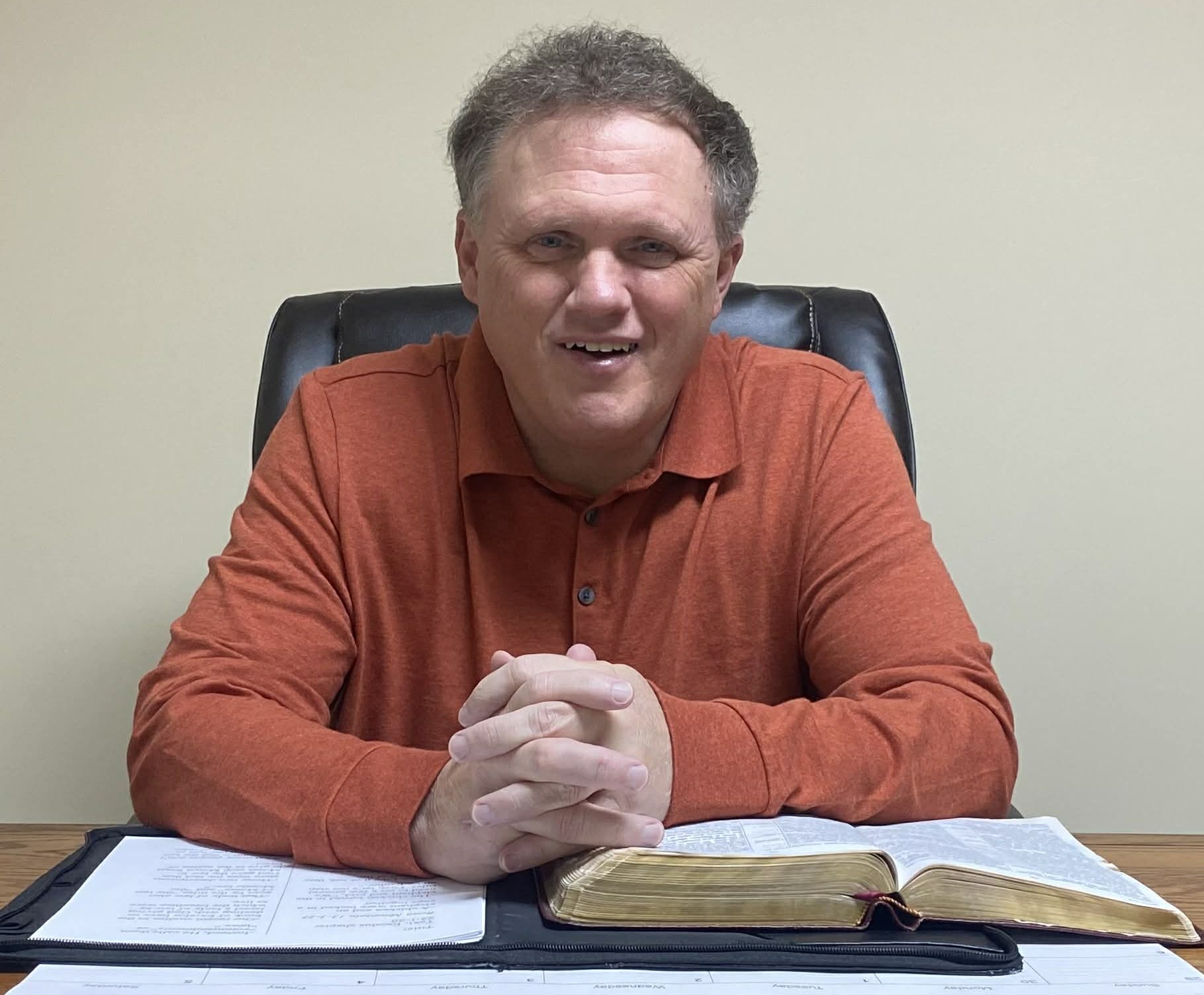
Regular readers will notice that I’ve recently tweaked some things about the blog’s appearance. I changed the background color from a shade of blue to a shade of maroon, and I also changed the font to something a little different. I added in a more recent picture of myself, too. These cosmetic updates simply serve to keep the site looking fresh. Nothing about the blog’s content has been changed or deleted.

On the subject of new stuff, the church I pastor — Roan Mountain Baptist Church — now has a website up and running. The site is still a bit of a work in progress, but we’re off to a good start with it. You can access it at roanmountainbaptist.com. The site provides information about the history of our church, a statement of our beliefs, some pictures of our folks, a schedule of our service times, etc. It also features a link to this blog and will soon provide a link to our new You Tube channel where the videos of our Sunday morning services will be archived for viewing. If you are interested in watching the two videos we’ve already done (for our January 5th and 12th services), just go to You Tube and search “Roan Mountain Baptist Church.” You shouldn’t have any trouble locating the videos or playing them.

As for my family and myself, we are plugging along just fine. I’m now in my seventh month at Roan Mountain Baptist and things are going well. Tonya is still teaching math to the 7th graders at Bowman Middle School. Ryan is teaching Physical Education at Harris Middle School and will be serving as the head baseball coach for the season that will be starting in a few weeks. Royce is currently in his second semester of the General Education program at Mayland Community College. He’s also working at Ingles supermarket three days a week.

As usual, my desk looks like a landfill as it is covered with tons of little notes and papers that have to do with upcoming sermons, blog posts, and whatever else I’ve felt compelled to jot down a note about at some point and time. (By the way, that spotless desk I’m sitting at in the new picture is my desk at church, not my “real” desk at home.) Malcolm and I are still faithfully doing a podcast each week (more or less) even though we’re about as far from professionals as it gets. Our whole goal is to build solid spiritual meat into our discussions and trust God to use the whole endeavor in wonderful ways. I’ve also recently been trying to do a better job on Twitter. Yes, I do have a Twitter account, but for the most part I’ve only used it to advertise new posts on the blog. Lately, though, I’ve also been using it to share some of the zillion quotes that I’ve collected over the years. The plan is to keep doing this, but that’s been my plan before only to have it dwindle away to nothing. We’ll just have to see how it goes this time around.

People sometimes ask me what preachers I listen to each week. The truth is that I go through different seasons of my life, fixating on one preacher for a while and then moving on to another. Currently, I have the television broadcasts of two preachers set as timers on my D.V.R. One is the Love Worth Finding broadcast of the late Adrian Rogers, and the other is The Urban Alternative broadcast of Tony Evans. Rogers has been dead for 14 years now, but they are still showing his sermons. I don’t know how long they will be able to continue doing that because there comes a time when the whole setting looks dated — think back to my opening paragraph — but I’m certainly enjoying the broadcasts now. I’m enjoying the sermons of Tony Evans as well, and for Christmas I received The Tony Evans Study Bible and The Tony Evans Bible Commentary as gifts. That’s just what I needed, right? Another study Bible and another commentary.

In regards to Roan Mountain Baptist, this past January 1st I began a Wednesday-night series of studies in the book of Genesis, my favorite book in the Bible. This series isn’t a verse-by-verse type deal but will still require several months to complete. My Sunday-morning sermon this coming Sunday will cover what the Bible teaches about abortion. I’m preaching this in honor of this Sunday being National Right to Life Sunday. The following Sunday, January 26th, I’ll begin a ten-sermon prophecy series entitled “Things to Come.” If everything goes as it should, we’ll get the abortion sermon and the prophecy sermons posted onto the You Tube channel for any and all to hear if they so choose.

Well, I guess that’s about it for now. I hope you haven’t been too bored by this personal update. I offer this type of post periodically merely as a way of letting you folks know what’s going on with me. Believe it or not, people do ask every now and then.

As always, you have my heartfelt appreciation for reading this blog, and I trust that God will continue to use it as a source of blessing in your life. Please pray for me that He will lead me as to what to write. There’s no magic here, no fairy dust, no “Wile E Coyote Super Genius” at work. (Boy, I’m really showing my age with that reference). It’s just me, the Lord, a Bible, and a laptop. I’ve already written 984 more posts than I ever planned to write, and the jury remains out as to how many more I have in me. If this thing keeps going, that guy in the picture in the upper-right-hand corner will surely start looking more and more older. I guess the best I can hope for is that I’ll be like Adrian Rogers in that by way of technology I’ll be able to keep ministering long after I’m gone. That would be nice. Either way, it’s already been a fascinating ride and I sincerely thank you for joining me for it.

Posted in Personal | Tagged , , | 3 Comments

Till Friday and Even Beyond

Famed pastor J.H. Jowett was once faced with a perplexing problem that demanded action on his part. Being unsure of what action to take, he consulted fellow pastor Charles Berry and asked him, “What would you do if you were in my place?” Berry answered, “I don’t know; I’m not there.” Then Berry added in, “And you are not there yet. When do you have to act?” “On Friday,” answered Jowett. “Then,” said Berry, “you will find your way perfectly clear on Friday. The Lord will not fail you.”

And did God give Jowett the guidance he needed on Friday? Yes, He did. Sometime later Jowett shared the whole story with F.W. Boreham, another notable pastor of the time, and Boreham used the story as an illustration of how important it is to wait upon God for guidance. As Boreham said in his colorful way of evoking three Biblical stories to prove the point:

Give God time and even when the knife flashes in the air the ram will be seen caught in the thicket (Genesis 22:1-19). Give God time and even when Pharaoh’s host is on Israel’s heels, a path through the waters will be suddenly open (Exodus 14:1-31). Give God time and when the bed of the brook is dry, Elijah shall hear the guiding voice (1 Kings 17:1-16).

Maybe you are at this moment faced with a problem that calls for action on your part. (And let me remind you that choosing the option of doing nothing is actually an action.) But what should you do? You should saturate heaven with your prayers for God’s guidance and take no action until you receive that guidance. As Boreham noted, the Angel of the Lord didn’t speak to Abraham from heaven until Abraham had literally stretched out his knife to slay Isaac in sacrifice to God (Genesis 22:9-10), God didn’t part the Red Sea for the Israelites until Pharaoh’s soldiers and chariots were literally within sight of them (Exodus 14:9-10), and God didn’t tell Elijah to relocate to the widow’s house in Zarephath until the Cherith Brook that had been keeping Elijah in water literally dried up completely (1 Kings 17:7-8).

Someone has said, “God is never late, but He does miss numerous opportunities to be early.” Truer words were never spoken. But I’d like to add this to them: Even if God seems to be late, as was the case with Christ’s healing of Lazarus (John 11:1-44), He just has something completely different in mind — in Lazarus’ case, it was a resurrection — for the situation.

The takeaway from all this is that you should seek God’s guidance, wait for His answer, and trust Him until your “Friday” comes. Even more than that, if that “Friday” comes and goes without you hearing from Him, then you’ll know that He is up to something far better than you yourself have asked for or could have imagined. Putting it simply, God rarely gets in a hurry regarding anything He is doing in our lives, and His greatest works almost never take place according to our deadlines.

Posted in Uncategorized | 3 Comments

“Christian Verses” Podcast: Proverbs 4:26

In the new SoundCloud podcast, Malcolm Woody and I use Proverbs 4:26 as a launching point to say a few things about pondering the path you are currently walking. With the shine not being off this new year yet, it’s still a good season to take a serious look at your current situation and ask yourself some hard questions. Are you in God’s will right now? Are you walking a path that is pleasing to Him? Will the path you are on lead you to a good place? These are all worthy questions, and if you’ve got ten minutes Malcolm and I can help you address them in your life. Here’s the link to podcast:

https://soundcloud.com/user-185243867/ponder-your-pathcv2020001

Posted in "Christian Verses" podcast, God's Will, New Year | Tagged , | Leave a comment

Moved By the Holy Spirit

for prophecy never came by the will of man, but holy men of God spoke as they were moved by the Holy Spirit. (2 Peter 1:21, N.K.J.V.)

The Greek word translated as “moved” in this verse is phero. The word means “to bear” or “to carry.” It speaks of being borne along or carried along by some person, object, or force. It’s the same word that gets translated as “drive” in Acts 27:15 in the story of how the ship Paul was aboard got caught in a cyclonic storm. Because the wind was too strong to allow the ship to head into the wind, the sailors gave up on that plan and just let the wind “drive” (phero) the ship to wherever it might take it.

To be moved by God the Holy Spirit in this way is to completely let go of the reins of control and simply ride the wind of the Holy Spirit. Wherever the Spirit wants to take you, you go. Whatever He wants you to do, you do. Whatever He wants you to say, you say. Whatever He wants you to write, you write.

This is how God’s prophets prophesied. They were merely the vessels for God the Holy Spirit. Did each prophet have an individualized style of speaking and writing? Yes. Did each one have unique mannerisms? Yes. Did each one come from different backgrounds? Yes. But when it came time to prophesy, each one’s whole job was to empty himself of all self will and let the Holy Spirit have total control over him.

In this way, phero is similar in meaning to another Greek word, pleroo. While pleroo literally means “to fill to the full,” the way this filling plays itself out amounts to control. For example, in Ephesians 5:18 Paul contrasts being filled with the Holy Spirit to being drunk with wine. And how does a person being drunk with wine manifest itself? The wine makes the person say things he wouldn’t otherwise say, go places he wouldn’t otherwise go, and do things he wouldn’t otherwise do. In other words, the wine’s wind drives the person and the person is merely carried along by that wind.

Similarly, this is the relationship the indwelling Holy Spirit longs to have with the Christian. He wants to control the Christian from the inside. He wants the Christian to ride His wind. He wants to cause the Christian to say things he wouldn’t otherwise say, write things he wouldn’t otherwise write, go places he wouldn’t otherwise go, and do things he wouldn’t otherwise do. These will all be good adventures, mind you, acts carried out in the will and service of God just as God’s prophets of old spoke and wrote words for Him that were good, truthful, and helpful.

So, with all this understood, I guess the question to ask about now is, “What wind is currently driving you and thereby controlling you?” Is it the wind of the world with its warped ideas and wrong standards? Is it the wind of another person, one who has far too much influence over your life? Is it a demonic wind that has you carrying out the will of some demon to whom Satan has given his marching orders concerning you? Or could it even be the wind of your own logic as you think to yourself, “I don’t need to be borne along by the Holy Spirit. I know where I need to go. I know what I should do. I know what ought to be said. I know what’s called for in this situation”?

Needless to say, if a wind other than God the Holy is driving you, that’s a current from which you need to extricate yourself. You say, “Russell, I’d like to break free from this current but it is too strong.” Then tell God about it and ask Him to help you. Remember that no wind is as powerful as God the Holy Spirit, and when He starts blowing His wind in your life then all other winds must subside because they can’t compete.

Let this be an encouragement to you as you seek God’s will and service. Just as those prophets of old did great things for God, so can you. But you can’t do them until you let the Holy Spirit have complete control of you and start riding His wind current. I can’t tell you where that current will carry you, but I can tell you that it will be where God wants you to go.

Posted in Choices, Decisions, Doing Good, Dying To Self, God's Will, Service, The Holy Spirit | Tagged , , , , , | Leave a comment

Where Did Cain Get His Wife?

Twice in the past few weeks I’ve been asked, “Where did Cain get his wife?” The reason for the question is obvious to anyone who has read Genesis chapter 4. Genesis 4:1-15 speaks of a time when Adam and Eve and their two sons Cain and Abel were the only four people in existence upon the earth. Then Cain murdered Abel (4:1-8) and was sentenced by God to be a fugitive/vagabond upon the earth (4:9-15). But the next thing you know we’re told that Cain went and dwelt in the land of Nod (4:16), that he knew (in the Biblical sense) his wife, and that she gave birth to his son Enoch (4:17). Wait. What? When did Cain’s wife slip into the storyline of the human race?

There is really only one explanation for the origins of Cain’s wife. After Cain killed Abel, Adam fathered another son through Eve. That son’s name was Seth. Adam was 130 years old when Seth was born (Genesis 5:3), and Adam lived another 800 years after Seth’s birth (Genesis 5:4). Furthermore, over the course of those 800 years, Adam had untold numbers of not only sons but also daughters through Eve (Genesis 5:5). Obviously, at some point, Cain married one of his sisters.

For Cain to have done that, several years had to have passed between his murder of Abel and his marriage. The scenario involving the least number of years would have been for the sister to have been Adam and Eve’s first baby girl, her being born next in line after Seth. The girl would then have had to have reached a reasonable age for her to marry and give birth herself. Fifteen to twenty years would seem to provide a low-end ballpark range for how long Cain must have waited to marry and become a father. Of course, the time elapsed could have been considerably longer.

And what was Cain doing during those years of waiting? No doubt he was fulfilling God’s prophetic words against him. We find those words in Genesis 4:12, where God says to him following Abel’s death, “A fugitive and a vagabond you shall be on the earth” (N.K.J.V.). While Genesis 4:17 does say that Cain built a city, he didn’t build it until after the birth of his son. As a matter of fact, he even named the city for his son: Enoch. Therefore, it seems perfectly logical to assume that Cain played his prophesied role of fugitive/vagabond prior to his marriage, the birth of his son, and the building of his city.

Someone might object to this whole explanation by citing the potentially debilitating effects of inbreeding. In answer to that, I’ll close this post by providing an extended quote from renowned pastor and scholar James Montgomery Boice. In Volume 1 of his excellent three-volume commentary set on Genesis, he writes:

I have taken part in a number of meetings growing out of the work of the International Council on Biblical Inerrancy, and at a number of them, where the doctrine of the full inspiration and inerrancy of the Bible has been upheld, there have been question and answer periods. I have been surprised to find that at most of these question periods someone sooner or later asks the age-old question: “Where did Cain get his wife?” Many people are interested in that man’s wife.

…Where did Cain get his wife? Well, if you turn over the page of the Bible to chapter 5, you find in verse 4 that “after Seth was born, Adam lived 800 years and had other sons and daughters.” Could Cain marry his own sister? Yes, he could — in those early days when the race had not yet suffered the pollution of the succeeding centuries. If you were going to drink directly from the Hudson river, would you not rather drink from it up in the Adirondack mountains where it is fresh and pure than down by New York City after it has picked up the pollution of the scores of cites along its banks? It is the same with the human race. Today close interbreeding brings out harmful genes and results in lower IQs, among other things. But in the early days it was no so. Abram married his half-sister Sarah, and before that Cain married his full sisters as did the others born in those days.

Posted in Bible Study, God's Word, Scripture, The Bible | Tagged , , , , , | Leave a comment

How George Muller Used His Bible

Preachers have been using stories from the life of Rev. George Muller as sermon illustrations for a long time now. Muller was an evangelist and a missionary, but he is most famous for founding and overseeing multiple orphanages and Christian schools in England in the mid-to-late 1800s. Still, while it is estimated that over the course of his lifetime Muller cared for 10,000 orphans and saw 120,000 students educated, the sermon illustrations never focus upon any one orphan or any one student. They focus instead upon Muller’s uncommon faith and the oftentimes virtually miraculous answers he received to his prayers. Muller, you see, was a man who early on in his life made the decision to never borrow money for anything he wanted to start, build, or sustain. If God didn’t provide the means by way of people voluntarily making charitable donations, Muller would pray until God did provide.

In one of the most famous stories from Muller’s life, the children in his orphanage were all sitting down at the breakfast table one morning but there was absolutely nothing for them to eat that day. Muller, in his typical fashion, had the children bow their heads in prayer and led them in a prayer of thanksgiving. No sooner had he finished his prayer than a knock was heard at the door. It was a local baker who had brought enough bread to feed everyone in the orphanage. God had burdened the baker the previous night to get out of bed and bake bread for the orphanage. But the story doesn’t end there. Even as the baker was unloading the bread, a milk man came to the orphanage door. His milk cart had just broken down right in front of the orphanage and all of his milk was going to turn bad if the orphanage couldn’t use it. Such was George Muller’s life.

While I have heard, read, and (yes) used Muller stories many times over the course of my ministry, I recently came across a personal word from him that I didn’t even know existed. It was entitled How I Use My Bible, and it was Muller’s testimony about how he had once made a significant change in his morning schedule. I won’t restate the entire piece here, but I will provide the highlights of it.

Being the great man of prayer he was, Muller would get up very early each morning, dress himself, and immediately enter into a lengthy time of prayer before breakfast. He kept up this daily schedule for over a decade but found himself becoming increasingly frustrated over how long it took him in prayer to enter into what he called “the holy place” with God. He wrote:

I often spent a quarter of an hour on my knees before being conscious of myself as having derived comfort, encouragement, humbling of soul, etc.; and often, after having suffered much from wandering of mind for the first ten minutes or a quarter of an hour or even a half hour, I only then began to really pray.

Finally, there came a point where Muller’s frustration led him to try a different approach to his morning schedule. Rather than get up, get dressed, and begin praying, he would get up, get dressed, and begin reading his Bible. This early morning Bible reading, Muller found, made all the difference to his morning quiet time. In his own words, he described his reading process as follows:

I began therefore to meditate on the New Testament from the beginning, early in the morning. The first thing I did, after having asked in a few words the Lord’s blessing upon His precious Word, was to begin to meditate on the Word of God, searching as it were into every verse to get a blessing out of it, not for the sake of preaching on what I had meditated upon, but for obtaining food for my own soul.

The result I have found to be almost invariable this, that after a very few minutes my soul has been led to confession or to thankfulness or to intercession or to supplication, so that though I did not, as it were, give myself to prayer, but to meditation, yet it turned almost immediately more or less into prayer.

When thus I have been for a while making confession or intercession or supplication, or have given thanks, I go on to the next words or verse, turning all as I go into prayer for myself or others, as the Word may lead to it, but still continually keeping before me that food for my own soul is the object of my meditation.

Did you catch what Muller threw there? He got up each day, opened his Bible to a passage — he says he began with the New Testament but I figure that he eventually started reading from the Old Testament as well — and began reading a passage word for word until something in the passage impressed him to say a quick prayer of confession, thankfulness, intercession, or supplication (asking, requesting). Then, having offered the brief prayer, he moved on to the next word, thought, or verse until something else impressed him to offer another quick prayer, whichever type of prayer was in order.

Two things about Muller’s testimony stand out to me. First, the morning prayers of this legendary man of prayer actually sprang from his reading of the Bible. Rather than see Bible reading and prayer as rivals for his time, Muller found a way to combine them into a singular river. Second, his goal in Bible reading each morning was to be nourished himself by way of God’s word, not get sermon material or preaching points. He wanted to be fed spiritually before he ate breakfast to be fed physically.

So what do you think? Will George Muller’s approach to having a daily quiet time with the Lord still work in this modern era? I’m sure it will. I myself am a night owl, not a morning person, but the important thing is the combining of Bible reading and prayer. That, of course, can happen anytime of day. And maybe, just maybe, whenever and wherever we do that combining we’ll start seeing some of those “Muller style” answers to prayer. I know that I sure could use some of those, and my guess is that you could, too.

Posted in Bible Study, Discipleship, Faithfulness, Needs, Prayer, Prayer Requests, Scripture | Tagged , , , | Leave a comment

The Snowstorm That Helped Charles Spurgeon Get Saved

This past Saturday night we got a little skiff of snow that created some slick roads and icy parking lots early Sunday morning. Consequently, like some other churches in our area, we cancelled Sunday School and 11:00 p.m. worship service Sunday morning and opted instead for a 2:00 p.m. worship service Sunday afternoon. All things considered, the attendance at the service was pretty good and we had a blessed time in the Lord.

The service brought to my mind the story of the conversion of Charles Spurgeon, the most legendary preacher England ever produced. To make the story even more relevant, it occurred on today’s date (January 6) way back in 1850. Spurgeon himself loved to recount the tale, telling it hundreds of times over the course of the years, enough to make it probably the most famous conversion story in England’s history.

As a backdrop for the story, you need to know that Spurgeon was born into what we would call a Christian home. He was christened as an infant and became a member of the Congregational church. As he got older, he read the Bible and prayed daily. Still, though, despite all his religion, he continued to feel spiritually lost. He had no joy or happiness about him. He walked around with a gloomy look upon his face all the time. In his sleep, he often dreamed of hell.

Everything changed, however, on that fateful day of Sunday, January 6, 1850. Young Spurgeon was 15 years old at the time, and that morning he was walking in a snowstorm to get to a church in his hometown of Colchester, in southeast England. His route took him up Hythe Hill, but as he ascended that hill he realized that the storm wasn’t going to allow him to proceed much further. He needed to seek shelter somewhere down a local street, and happily he found that the nearby Primitive Methodist Church of Artillery Street was having service that morning. He didn’t hesitate to join them despite the fact that all he knew about the Methodists was that they “sang so loudly that they made peoples’ heads ache.”

The snowstorm had severely affected church attendance that day as there were only 15 or so people there. The minister hadn’t even arrived. As Spurgeon used to tell it, “Snowed up, I suppose.” In the minister’s stead, a layman filled the pulpit. Spurgeon described him as “a very thin-looking man, a poor man, a shoemaker, a tailor, or something of that sort.”

The text the fellow read that morning was Isaiah 45:22:

Look unto me, and be ye saved, all the ends of the earth: for I am God, and there is none else. (K.J.V.)

As Spurgeon listened to that text, he was immediately struck by the potential hope he heard in it. With his interest piqued, he sat there intently listening as the layman proceeded to explain that looking didn’t take much effort, education, or income, but the looking had to be done unto the Lord. Looking unto one’s self would provide no help.

Finally, the layman ended his short talk by saying for Jesus, “Look unto Me; I am sweating great drops of blood. Look unto Me; I am hanging on a cross. Look unto Me; I am dead and buried. Look unto Me; I rise again. Look unto Me; I ascend: I am sitting at My Father’s right hand. O, look to Me! Look to Me!”

It was then that the layman looked squarely at the visiting Spurgeon and said, “Young man, you look very miserable. And you will always be miserable — miserable in life and miserable in death — if you do not obey my text. But if you obey now, this moment, you will be saved.” Then the man shouted at Spurgeon, “Young man, look to Jesus Christ!”

And did young Spurgeon look to Jesus? You bet he did! As the close to this post, I’ll let Spurgeon tell it in his own words. He said:

I saw at once the way of salvation. I know not what else he said — I did not take much notice of it — I was so possessed with that one thought. I had been waiting to do fifty things, but when I heard that word “Look!” what a charming word it seemed to me. Oh! I looked until I could have almost looked my eyes away. There and then the cloud was gone, the darkness was rolled away, and that moment I saw the sun; and I could have risen that instant, and sung with the most enthusiastic of them, of the precious blood of Christ, and the simple faith which looks alone to Him. Oh, that somebody had told me this before, “Trust Christ, and you shall be saved.”

Posted in Belief, Church Attendance, Faith, God's Omnipotence, God's Timing, God's Provision, God's Sovereignty, Salvation, Scripture, The Bible, The Gospel | Tagged , , , , | 4 Comments

Pet Verses

Why are there so many different denominations, groups, cliques, and movements, with each one claiming the title “Christian”? It is because they all have “pet verses” to which they give favored preference over other verses from scripture. Allow me to offer five examples from a list that could surely provide many more.

Example #1: The Church of Christ denomination as well as The Christian Church (The Disciples of Christ) denomination both believe that water baptism is an essential requirement for salvation. Their pet verse is Acts 2:38, which says:

Then Peter said unto them, Repent, and be baptized every one of you in the name of Jesus Christ for the remission of sins, and ye shall receive the gift of the Holy Ghost. (K.J.V.)

Of course, one verse these two denominations don’t say much about is 1 Corinthians 1:17, where Paul says to the Christians of Corinth:

For Christ sent me not to baptize, but to preach the gospel: not with wisdom of words, lest the cross of Christ should be made of none effect. (K.J.V.)

It certainly seems strange that Paul, who desperately wanted to lead people to salvation in Christ, would say, “Christ sent me not to baptize” if baptism is a requirement for salvation.

Example #2: While Calvinism is not itself a denomination, it is a doctrinal system that pervades various denominations such as Presbyterians, Primitive Baptists, and Reformed Baptists. Also, various congregations that are aligned with the Southern Baptist Convention are Calvinistic in nature. One of Calvinism’s pet verses is Ephesians 2:1, which says:

And you He made alive, who were dead in trespasses and sins,… (N.K.J.V.)

In reference to an individual making a decision to believe in Christ as Savior, Calvinists use this verse to teach that salvation is wholly and completely an act of God, an act in which the individual essentially has no free will. To the Calvinist, if God has chosen an individual for salvation from eternity past, He will do a work inside that person to make sure the person places saving belief in Jesus. As the Calvinists say concerning an individual making a freewill decision to believe in Christ, “A dead man — one dead in trespasses and sins — can’t make any decision, even one to believe in Christ as Savior.”

There are, however, many verses that flatly contradict Calvinism. One of them is John 5:40, where Jesus says to a group of lost Jews:

“But you are not willing to come to Me that you may have life.” (N.K.J.V.)

Notice that Jesus didn’t say to those Jews, “You can’t come to Me because God the Father didn’t chose you for salvation from eternity past.” No, what He said was, “You aren’t willing to come to Me.” If, as Calvinism contends, those Jews had absolutely no possibility of coming to Jesus for salvation because they were all dead in trespasses and sins and dead men can’t make decisions, Jesus’ words would have amounted to Him taunting them concerning their eternally lost state and powerlessness to do anything about it.

Example #3: Like Calvinism, the teaching that a Christian can potentially lose his or her salvation is one that is prominently featured in various Christian denominations and groups such as Catholics, Freewill Baptists, and Pentecostals. One of the pet verses used to support this teaching is John 15:2, where Jesus says:

“If anyone does not abide in Me, he is cast out as a branch and is withered; and they gather them and throw them into the fire, and they are burned.” (N.K.J.V.)

On the flip side, however, besides the fact that the Bible doesn’t offer even one example of anyone getting saved twice, there are numerous verses and passages that can be used to teach the eternal security of the Christian. One of those verses is John 10:28, which is another quote from Jesus:

“And I give them eternal life, and they shall never perish; neither shall anyone snatch them out of My hand.” (N.K.J.V.)

Example #4: Many denominations (Southern Baptists, Independent Baptists, Freewill Baptists, Pentecostals, etc.) teach that any and all consumption of alcohol is a sin. One of their pet verses to authenticate this teaching is Proverbs 20:1, which says:

Wine is a mocker, strong drink is raging: and whosoever is deceived thereby is no wise. (K.J.V.)

Is drunkenness always a sin? Absolutely. But before we start outlawing any and all drinking, regardless of the amount and the setting, we might want to remember that Jesus turned the water into wine, not grape juice. And then there is 1 Timothy 5:23, where Paul says to Timothy:

Drink no longer water, but use a little wine for thy stomach’s sake and thine often infirmities. (K.J.V.)

Example #5: The Seventh Day Adventists teach that Christians should meet together for weekly worship on Saturday rather than Sunday. This teaching stems from the fact that the Jewish Sabbath officially lasted from sundown Friday evening to sundown Saturday evening. As might be expected, one of the pet verses the Seventh Day Adventists use to promote this teaching is Exodus 20:8:

Remember the sabbath day, to keep it holy. (K.J.V.)

Okay, so is there a verse that can be used to contradict the teaching that Christians should meet for worship on the Sabbath (Saturday)? Yes, there is. That verse is Colossians 2:16, which says:

Let no man therefore judge you in meat, or in drink, or in respect of a holy day, or of the new moon, or of the sabbath days: (K.J.V.)

Can you see how, if we couple that verse up with other verses such as 1 Corinthians 16:2 — which indicates that the early Christians met for worship on Sunday — we can understand why the vast majority of Christians meet for worship on Sunday rather than Saturday?

In conclusion, what I’m trying to get you to realize by way of these five examples is that it is unwise to build your doctrine around a handful of your pet verses. The Bible is a highly complex book that can wrongly be used to teach just about anything, and a ton of time and effort are required to do the studying necessary to get at what the book actually teaches. That’s why cherry-picking a verse here and there to back up what you already believe just won’t get the job done. Instead, you must embrace the totality of scripture, from Genesis to The Revelation, and compare your pet verses with other verses that might be used to contradict them.

This, then, is my challenge to you: Whatever you believe, give the teachings of other denominations, groups, cliques, and movements a fair investigation. Hear them out concerning their pet verses and their comebacks to your pet verses, and keep an open mind about things. After all, everybody thinks they have “the truth.” (I’ve never once heard a preacher stand in a pulpit and say, “Today, I’m going to teach you a pack of lies.”)

The fact is that everybody uses certain portions of scripture in their attempts to back up what they believe. Obviously, though, everybody isn’t right. How can they be when there is so much blatant disagreement? Someone has to be wrong, and you don’t want that someone to be you. As for God, He doesn’t do pet verses. He considers each and every word of the Bible to be inspired by Him and, as such, equally important. Therefore, that’s the attitude that we must have as well if we want to stand a chance of being right in our beliefs.

Posted in Alcohol, Baptism, Bible Study, Calvinism, Church Attendance, Discernment, Election, Eternal Security, God's Word, Scripture, The Bible, Truth | Tagged , , , , , | 6 Comments