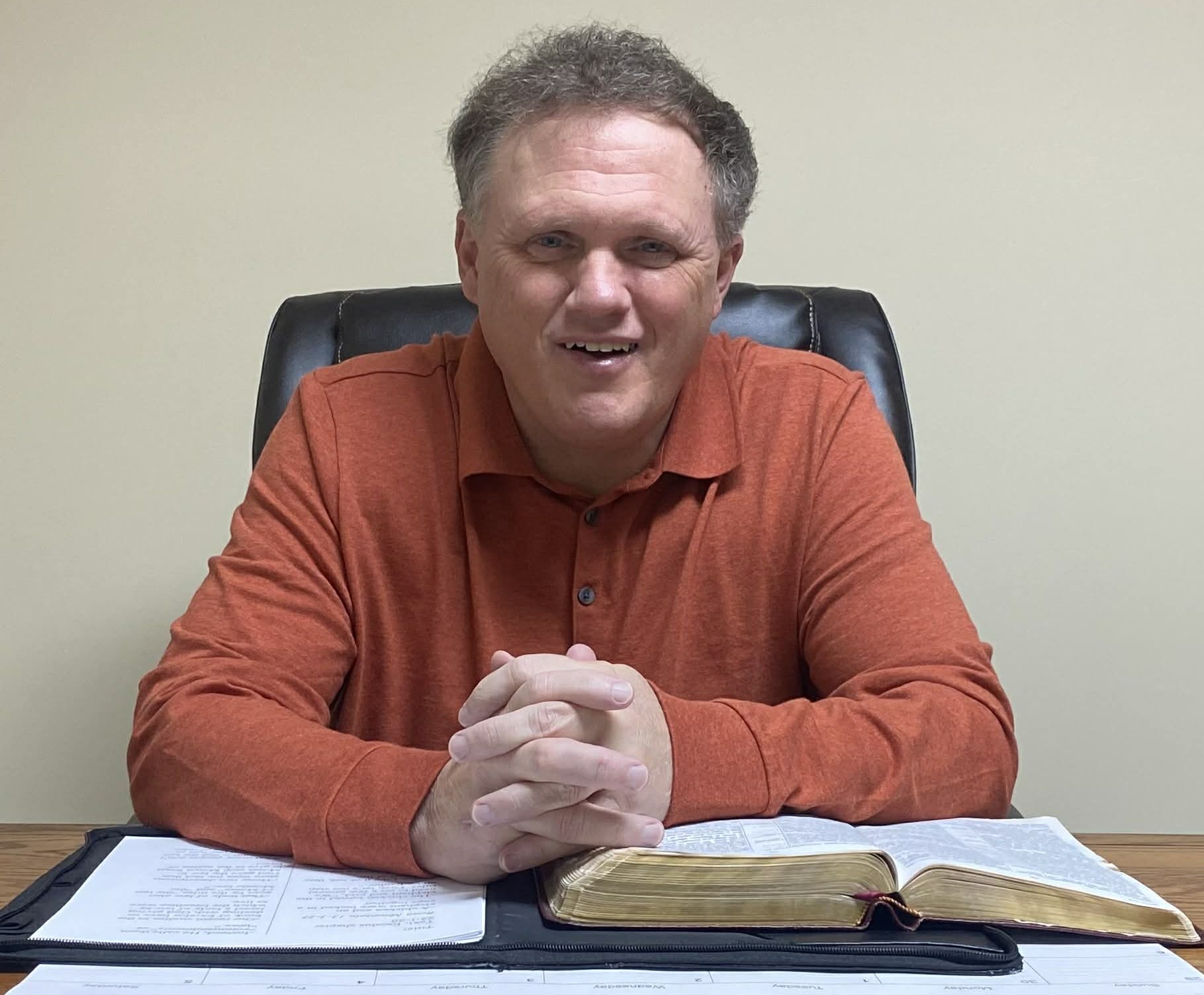
Christianity In Shoe Leather

In my last post, “For His Name’s Sake,” I talked about how a Christian’s conduct has a direct effect upon Christ’s reputation in the world. If that conduct is sinful, that does harm to Christ’s name. Now let me give you a practical example that will help you to better understand this.

Let’s say that a man who isn’t a Christian goes to buy a used car. He walks onto a car lot and has a salesman come out, grinning from ear to ear. The salesman says, “Can I help you?”

The man says, “Yes, I like the looks of this car right here. Is it a good car?” The salesman says, “I’ll let you in on a little secret. Just between you and me, this car is the best buy on the lot. It is mechanically as sound as a dollar. I wouldn’t mind taking off cross-country in this car.” But even as those words roll off the salesman’s lips, he knows they are a lie. The mechanics have told him that the car’s engine needs to be completely rebuilt. 

Well, the trusting potential buyer takes the car out for a test-spin. The car does alright on the short test drive, and the man decides to buy it. The salesman says, “Step into my office, and we’ll sign the papers.”

As they step into the office, the buyer notices that hanging on the salesman’s office wall is a beautiful picture of Jesus. He also notices that the salesman has a little plaque on his desk. The plaque reads, “Christ is the answer.” The man says to the salesman, “I gather that you are a Christian.” The salesman says, “Oh yes. I’ve been a deacon in my church for twenty years.”

The man says, “Well, if you can’t trust a deacon, who can you trust?” The salesman says, “That’s right. You can trust me. That car is just a little bit too old to have any kind of warranty, but I’ll take care of you. If you have any trouble with the car, just bring it back to me. I’ll make things right. You have my personal word on that.”

So, the papers are signed and the deal is done. The man just bought himself a car. He climbs into it, starts it up, waves to the salesman, and pulls off the lot. He gets about two miles up the road when the smoke starts pouring out of the hood. Luckily, there is a garage right there on the corner. The man pulls into the garage, and the mechanic takes a look at the engine. The mechanic says, “Sir, I hate to tell you this, but this motor is completely shot. It needs a total rebuilding.”

Upon hearing that, the man immediately marches the two miles back up the road to the car lot. He finds the salesman in his office. He says, “Pal, you sold me a lemon. I drove that car two miles and the motor blew up. I want you to keep your word and make things right.”

And what does that used-car selling deacon do? He says, “Sir, I feel awful about this, but our policy is that all sales are final. And since the car doesn’t have a warranty, I’m afraid that there isn’t much I can do for you.”

You say, “Boy, that car-buyer won’t think much of that Christian salesman.” You’re right. I’ll tell you something else: He won’t think much of Christ either! He’ll say, “If that’s what being a Christian is all about, the Christians can have it. I can do better than that on my own. Who needs a Savior who can only produce that kind of behavior?”

This is why I say, Christian, that you are called to live your faith wherever you happen to be at the time. If you go around claiming to be a Christian, you’d better act right. If you have a tag that says “Christ is my co-pilot,” you’d better be honest. If you have a bumper-sticker that says “Honk, If You Love Jesus,” you’d better pay your bills. If you wear a shirt that says “My best friend is a Jewish carpenter,” you’d better watch your language. Why? Because it is the very name of Christ that is at stake!

You can call this “Christianity in shoe-leather.” It is bringing your Christianity down out of the clouds of doctrine. It is pulling your religion up off your church seat. It is transforming your spirituality from principle into practice.

And how do you do it? Each day that you wake up, you spend time in prayer and say, “Jesus, today, wherever I may go, whatever the day holds for me, lead me in the paths of righteousness. You be the guiding shepherd; I’ll be the obedient sheep.” Nothing less will do if you really want Christ to guide you into paths of righteousness.

For His Name’s Sake

The Lord is my shepherd; I shall not want. He makes me to lie down in green pastures; He leads me beside the still waters. He restores my soul; He leads me in the paths of righteousness for His name’s sake. (Psalm 23:1-3)

Obviously, there are a good many profound truths to be found in these three verses, but I would specifically like to draw your attention to the last part of verse 3. David says of the Lord, “He leads me in the paths of righteousness for His name’s sake.”

These verses describe Jesus as the shepherd and Christians as His sheep. Christ’s name isn’t actually used in the verses, but He certainly had this passage in mind when He said in John 10:11,14,27: “I am the good shepherd. The good shepherd gives His life for the sheep…I am the good shepherd; and I know My sheep, and am known by My own…My sheep hear My voice, and I know them, and they follow Me.”

And so, Jesus leads Christians in the paths of righteousness for the sake of His own name. If I can get this one truth burned into your mind I will have accomplished something. Jesus leads Christians in the paths of righteousness so that His very name will not be besmirched, soiled, or damaged.

Does walking in the paths of righteousness help the individual Christian? Of course, it does. Does a Christian walking in the paths of righteousness make the world a better place? Of course, it does. But I’m not talking about those ideas right now. Right now I’m hammering on the fact that Jesus leads Christians in the paths of righteousness for the purpose of protecting His own name.

In your mind’s eye, I want you to go with me back to a scene in ancient Israel. Let’s tag along and watch as a local shepherd leads a flock of sheep. As we walk along behind the shepherd, we observe that he seems to be doing an adequate job of leading his sheep. Now it is time, though, for the sheep to eat, and we are interested in how the shepherd will handle that need. We are also aware that once the sheep have filled their stomachs they will want to lie down and rest a while.

With this in our minds, we watch as for some unknown reason the shepherd leads the sheep right past a beautiful, green pasture that would provide perfect food and rest for the sheep. The shepherd seems to have another place in mind as he leads the flock onward. Finally, he brings them to an almost barren, rocky piece of ground. There are just a few sparse patches of grass growing here and there. This is where the shepherd has been headed all along.

The sheep try to eat, but there isn’t enough grass to fill their stomachs. Pretty soon they give up and lie down. They don’t get much rest, though. The ground is far too hard and rocky.

After watching this, we begin to wonder about the shepherd’s judgment. Still, we want to give him the benefit of the doubt, and so we wait around until it is time for him to again put the sheep on the move. The sheep have had their time of eating and resting. Now it is time for them to get some water.

We tag along as the shepherd leads the sheep to an outstanding watering-hole. The waters are still and quiet. We’ve heard that sheep don’t like rushing waters. They can’t swim very well and are terrified of swift currents. Sheep like calm, still, quiet waters. This hole is just right.

But the shepherd shakes his head in disapproval. In his opinion, these waters won’t do. Onward he leads the sheep. Eventually, there is the sound of a rushing stream and the shepherd picks up his pace. He gets to the swift stream, brings the sheep to the water’s edge, and waits for them to start drinking.

The sheep, however, are overly cautious. They won’t go near the dangerous current. Their fear keeps them from getting the water that at this point they desperately need.

After a while, the shepherd realizes that the sheep aren’t going to drink the water, and so he begins again with his leading. The sheep are hungry and tired because the shepherd walked past the green pastures. They are thirsty because he shunned the quiet waters. It’s obvious to us that the sheep need to be refreshed, revived, and restored. Still, the shepherd pushes them onward.

We follow close behind, by now completely bewildered at the shepherd’s actions. Over the remaining course of the day, we watch as he leads those sheep to places that sheep have no business going. He leads them in precarious paths that run along the edges of cliffs. He leads them in dangerous paths that run by places where lions are known to suddenly attack. He leads them in rough paths that run through ditches and briars. Finally, we have seen enough and make our way back to town.

Once we get into town, a man comes up to us and says, “You are the people who tagged along and watched the shepherd lead his flock. Tell me, what did you think of his shepherding?” Having seen what we’ve seen, what must our answer be? We have to say that the shepherd doesn’t know how to care for sheep. We have to say that he is dangerous for sheep. We have to say that he is not to be trusted with sheep. The fact of the matter is, it is absolutely impossible for us to recommend that fellow as a shepherd. We explain this to the man who asked our opinion, and our critical words begin making their way through the town. Pretty soon, the shepherd’s reputation is ruined.

Now let’s come back to the present day. I ask you, Christian, what kind of a reputation as a shepherd does Jesus desire to have amongst the people of this world? The answer is, He wants to be known as a good shepherd. Well, how can He gain such a reputation? To gain it, He must lead us, His sheep, in the paths of righteousness. Therefore, Christian, you’ve got to realize that when you display depravity, when you persist in sin, when you fall short of holiness, when you forego paths of righteousness, you damage not only your name but also Christ’s name.

You see, as the lost people of this world watch the everyday conduct of professing Christians, it is Christ’s reputation as a shepherd that is on the line. We mar the very name of our Savior whenever we refuse to allow Him to lead us in paths of righteousness. That is a sobering thought.

Now, maybe you would say to me, “Wait a minute, Russell. I am a Christian, but I don’t always follow Christ as I should. It isn’t right, then, for Christ’s name to be soiled when He isn’t the one leading me in paths of sin.” You make a good point. The people of this world shouldn’t hold it against Jesus when a Christian refuses to live in a holy manner. But the problem is that the people of this world don’t really understand that Christ will not lead rebellious sheep. They don’t differentiate between the Christian who is living a holy life and the Christian who is backslidden. All they know is that both kinds of Christians profess to have Christ as shepherd.

Is this fair? No. Is it reality? Yes. Your fellow Christians may understand that Christ is not the leader He can be if you aren’t the follower you ought to be, but the lost people of this world won’t. That’s why, Christian, when you stand up and say to others, “Jesus Christ is my Savior,” you’d better do all that you can to ensure that you walk in those paths of righteousness.

Got Any Trees That Need Cutting?

Charles Bracelan Flood’s book, Lee: The Last Years, gives us a poignant story from the life of Robert E. Lee. Lee visited the home of a Kentucky woman shortly after the end of the Civil War. The woman took him out to the remains of a grand old tree that stood in front of her home. Lee listened as she cried bitter tears and cursed the Union army for destroying the tree’s limbs and trunk. When she finished, she expected him to condemn the North or at least sympathize with her loss. Lee, instead, paused for a moment and said, “Cut it down, my dear madam, and forget it.”

Finish this sentence for me: “If I would be honest, I have never fully forgiven ………..” If no one in particular came to your mind, it’s possible that you aren’t carrying any old grudges or hatreds. On the other hand, if a name instinctively popped in there, even if you didn’t want it to pop in there, you need to address that issue in your life.

Carefully consider the following quotes from Jesus:

1. Matthew 6:14-15: “For if you forgive men their trespasses, your heavenly Father will also forgive you. But if you do not forgive men their trespasses, neither will your Father forgive your trespasses.”

2. Mark 11:25-26: “And whenever you stand praying, if you have anything against anyone, forgive him, that your Father in heaven may also forgive you your trespasses. But if you do not forgive, neither will your Father in heaven forgive your trespasses.”

3. Luke 11:4: “And forgive us our sins, for we also forgive everyone who is indebted to us.”

4. Luke 6:37: “Judge not, and you shall not be judged. Condemn not, and you shall not be condemned. Forgive, and you will be forgiven.”

It is hard to overemphasize the seriousness of these quotes. If Jesus said something once it was important. How important, then, must a subject be for him to have hammered on it multiple times? You might not see your refusing to forgive someone as a big deal, but I assure you that Jesus does.

Just like that Kentucky woman who carried a hatred for the Union army because of what they had done to her tree, perhaps you are withholding forgiveness from someone who has wronged you. Let me encourage you to take Robert E. Lee’s advice. Cut that tree down and forget it. Stop visiting it every day. Stop thinking about it all the time. Stop shedding tears about it. Stop mourning over it. Stop trying to get others to join you in your mourning. Instead, extend forgiveness to the person, even if the forgiveness is undeserved. You’ll be amazed at what a difference this will make in your life. After all, spending hours on end staring at a ruined, bombed out tree doesn’t make for much of a life.

The Right Kind Of Meditation

We’ve been mining Psalm 1:1-3 for spiritual truth this week. Here now is one last post on the passage. I’m calling this one “The Right Kind Of Meditation.”

The practice of meditation is typically associated with far-eastern religions and the mental exploration of one’s “inner self.” The Bible has nothing to say about that kind of meditation, and I put no stock in such a practice. However, in Psalm 1:2 the Bible does say of the godly, blessed man, “But his delight is in the law of the Lord, and in His law he meditates day and night.”

The Hebrew word that is translated as “meditates” is hagah. Specifically, it refers to the sighs and low sounds a person makes while musing over something. Imagine a man or woman silently reading a line from a book, pausing for a moment to give in-depth consideration to the line, and then lowly saying, “Hmmm…” That catches the idea behind the word.

The point of the verse then is that we should devote diligent, somber study to God’s written word. We should do this studying “day and night.” This doesn’t mean that the employee has to quit work and study the Bible full time. It doesn’t mean that the student has to quit school and only study the Bible. But it does mean that we should make time during the day and night to study the holy scriptures. More than that, this studying should be serious enough and impacting enough to make us say, “Hmmm…” as God’s truths are driven deep into our hearts.  

It’s been said that we hold our Bibles high but rarely open them. The average person’s Bible study might even be compared to the eating habits of a certain tribe of backwoods Aborigines in Australia. The explorers and researchers who discovered this tribe studied the tribe’s cultural habits and noticed that by age thirty the adults have practically no teeth. Further study gave the reason. It was learned that the tribe enjoys cooking meat in the open sand with water and fire. The meat is eaten with the sand actually clinging to it. By the age of thirty, after years of grinding, the teeth are worn away. You ask, “Then how do the adults over thirty eat that meat?” The answer is, the children are required to chew the meat in advance and then give it to the adults. This, of course, keeps the vicious cycle going because those children won’t have any teeth left when they get to be adults.

That story describes a lot of people’s relationship to the Bible. They want someone else to “chew” the scriptures up for them. They want someone else to put in the hard work of studying and then hand them all that knowledge and understanding. In that way these people never have to meditate upon the scriptures themselves. They can grab a bite here and there from a sermon or a commentary and be nourished without actually having to dig into the Bible for themselves.

I’m certainly not saying that preachers and teachers don’t have their place in God’s plan. You ought to enjoy the fruits of the labors of good, solid, doctrinally straight preachers and teachers. What I’m saying is that you need to study the Bible yourself as well. You see, fine meat still tastes good even after it’s been chewed on by someone else, but doesn’t it make for a more pleasurable dining experience when you do your own chewing?

Sin’s Progression

In my last post, I outlined Psalm 1:1-3 under the title “Blessedness.” Now I’d like to narrow the microscope down onto one particular aspect of that passage and offer a word about sin’s progression. Hardened sinners don’t get that way overnight. Psalm 1:1 describes a systematic progression.

First, the person gets counsel from the ungodly and walks in that counsel. That gets him started in the wrong direction. That’s why the verse speaks of walking in the counsel of the ungodly.

Second, walking in that counsel leads the person out of the will of God and into the path of sinners. Once he is in that path of sin, he realizes that he enjoys the sin and decides to stand around for a while in that way. He isn’t in any big hurry to confess the sin, repent of it, and get right with God. He’s stopped walking. Now he’s standing.

Third, he ends up sitting down in a seat in the midst of the scornful (hardened, calloused sinners). To take a seat is to settle in for a lengthy stay. It is to become part of the group.

Let me use just one kind of sin as an example of the progression of sin. Let’s say that a man is considering having an affair. He’s having some trouble in his marriage, and there is a woman at work who seems to be just what he needs.

Rather than seeking out counsel from a godly person who knows the Bible and how to apply it to life, this man gets counsel from an ungodly buddy of his. The buddy has been married and divorced three times and had numerous affairs over the course of those marriages. The buddy says, “Go for it. Have the affair. Take it from me, you’ll be glad that you lived a little.” So, the man takes that ungodly counsel, walks in it, leaves the will of God, and has a one-night stand with that co-worker. What’s he doing? He is walking in the counsel of the ungodly.

Well, the man discovers that he enjoys that one night stand. He doesn’t get caught, and he finds that the sneaking around is sort of exciting. So he keeps the affair going. Once or twice a week he meets with his “other woman.” What’s he doing now? He is standing in the path of sinners. The rebellion against God is now deeper and more concrete.

Then, somewhere along the way, the man goes from standing in the path of sinners to sitting down in the seat of the scornful. He becomes cynical and hardened. In some illogical way, he’s angry at God because God didn’t give him a “happily ever after” marriage. He gets to the point where he mocks the things of God and despises anything remotely spiritual.

Do you see the progression of sin? First, there is the walking. Then there is the standing. Finally, there is the sitting.

And that is where the cycle tragically begins to repeat itself on another victim. Sticking with my example, when a young man naively asks the hardened, scornful sinner about getting married, he sarcastically answers, “Yeah, that’s what you need to do. Go and get married. Hook yourself up to that old ball and chain.” You see, that answer comes under the category “the counsel of the ungodly,” and the naive potential groom then has to make his own decision as to whether or not to walk in it and begin his own line of sin’s progression.

Blessedness

Psalm 1:1-3 says:

“Blessed is the man who walks not in the counsel of the ungodly, nor stands in the path of sinners, nor sits in the seat of the scornful. But his delight is in the law of the Lord, and in His law he meditates day and night. He shall be like a tree planted by the rivers of water, that brings forth its fruit in it season, whose leaf also shall not wither. And whatever he does shall prosper.”

I’d like to point out that the proper pronunciation of the first word of this passage is “bless-ed,” not “blessed.” The Bible uses one Hebrew word to refer to “bless-ed” and another to refer to “blessed.” The Hebrew word for “blessed” is barak. It is used in passages such as Genesis 1:28, which says of Adam and Eve, “And God blessed them.”

But the Hebrew word that is used here in Psalm 1:1 is esher. This word carries with it various shades of meaning. It can mean happy, fortunate, enviable, or prosperous.

Actually, esher is plural. That’s why it’s been suggested that it could accurately be translated as “blessednesses.” You see, this is not just one blessing that is being described. This is talking about abiding in a continual state of experiencing blessing after blessing after blessing. There is a multiplicity of blessings that rest upon the bless-ed person. I’d rather be “bless-ed” than just “blessed.”

Now, this passage gives us three main thoughts about the blessed. Let’s walk through these together. There is some awesome spiritual stuff here.

First, in verse 1 we are given a clear word about the blessed person in relation to separation. Blessed people are marked by things they do not do. You see, the book of Psalms opens by dispelling the notion that the sinful life is the good life.

Three negatives are mentioned. Negative #1 is: Blessed is the man who does not walk in the counsel of the ungodly. Who do you look to for advice? Is that person a godly person? Is that person living under the lordship of Jesus Christ? Is that person highly knowledgeable of what the Bible teaches? Is that person wise in applying the Bible to everyday life? Is that person really in tune with the Lord?

Negative #2 is: Blessed is the man who does not stand in the path of sinners. There is a path of sin in which the ungodly stand. The fact that they stand in this path shows that their sinfulness isn’t just a one-time slip up. These people are engaged in a daily, continual lifestyle of sin. They aren’t trying to get off the path of sinners. To the contrary, they continually stand in it.

Negative #3 is: Blessed is the man who does not sit in the seat of the scornful. The Hebrew word that is translated as “scornful” is luwts. It can also be translated as “mockers” or “scoffers.” These scorners are people who have contempt for God, His ways, and His standards. The verse talks about the seat of the scornful because these people are settled and fixed in their disgust towards God.

The passage’s second main thought concerns the blessed person in relation to scripture. Verse 2 says of the blessed man: “But his delight is in the law of the Lord, and in His law he meditates day and night.” The phrase “the law of the Lord” refers to the law that God gave the Israelites through Moses. That law was written down. We might say it was the “Bible” by which the Israelites lived. These words actually apply to us all the more then because we have so much more of the holy scriptures than the Israelites did. If you would be blessed, love the scriptures and learn the scriptures.

And then the text’s third main thought deals with the blessed person in relation to success. Verse 3 says: “He shall be like a tree planted by the rivers of water, that brings forth its fruit in its season; whose leaf also shall not wither; and whatever he does shall prosper.”

The blessed person is compared to a beautiful, bountiful tree. This tree is not withering away from a lack of water because it is planted by rivers of water. That ensures that it will continuingly thrive. Not surprisingly, this tree is not barren. It brings forth its fruit in season just when it should. Its leaf does not wither away either. The tree is strong and healthy. All of this is a beautiful description of the blessed person.

Then the description gets even better. The end of the verse says that whatever the blessed person does shall prosper. Of course, some people run off way too far with this idea. The “health and wealth” preachers that dominate religious television use verses like this to promote a wrong doctrine that can be summed up as “name it and claim it.” Just take your wish list to God, have the necessary amount of faith, and God will give you all the things that are on your wish list. But the truth is, God’s idea of prospering isn’t so simplistic.

I can best explain “whatever he does shall prosper” by pointing us to Joseph. Did you know that even when Joseph was wrongly sold into slavery God called him a prosperous man and caused whatever he did to prosper? Genesis 39:2-3 says:

“The Lord was with Joseph, and he was a successful man; and he was in the house of his master the Egyptian. And his master saw that the Lord was with him and that the Lord made all he did to prosper in his hand. So Joseph found favor in his sight, and served him. Then he made him overseer of his house, and all that he had he put under his authority.”

The Hebrew word that is used there to describe the prosperity that God gave to Joseph is the exact same Hebrew word that is used in verse 3 of our text. So, when you understand what God did for Joseph, even as Joseph was a servant in the house of Potiphar, you will understand the kind of prosperity that God bestows upon the blessed person.

When Joseph was a servant in Potiphar’s house, did he have a lot of money in his bank account? Absolutely not! Did he have a wife and children? No. Was he a man of prestige and standing in the community? No way. Nevertheless, God described him as a prosperous man.

Ultimately, Joseph did become rich beyond his wildest dreams as God made him the second most powerful man in all of Egypt, second only to Pharaoh himself. Also, God gave him a wife and two fine sons. But the fact is that Joseph was blessed and prosperous even before the power, wealth, and beautiful family. So it is with any person who truly lives out the requirements of Psalm 1:1-3.

A Three-Point Checklist For The New Year

Proverbs 4:25-27 says: “Let your eyes look straight ahead, and your eyelids look right before you. Ponder the path of your feet, and let all your ways be established. Do not turn to the right or the left. Remove your foot from evil.”

These verses make for one of the Bible’s best texts on the subject of a new year. In them Solomon offers a three-point checklist that will help us make this new year a godly, blessed, spiritually productive year. Let’s take a look at that checklist.

Item #1 is: Rivet your attention upon this new year. Solomon says, “Let your eyes look straight ahead, and your eyelids right before you.” Think of yourself as standing on the precipice of this new year. What should you do as you stand here? You should focus your attention straight ahead and fix your gaze on what lies ahead.

In order to do that, you’ll have to step out of your past. You might as well step out of it, because you can’t change one second of it anyway. Rearview mirrors make poor windshields!

You say, “But Russell, you don’t know my past. You don’t know the things I’ve done. You don’t know the things I’ve gone through.” Well, you’re right, I don’t know your past. But I do know two things. One, I know that Jesus wants to meet you right where you are and do wonderful things for you, in you, and through you. Two, I know that in order for Him to do that you’re going to have to join Him in the here and now. The fact is, this new year can be your fresh start with Christ.

One day a man stormed into the office of his local newspaper and said to the secretary, “I want to see the guy who is in charge of the obituaries.” When the secretary pointed him to a rookie reporter, the man marched over to that reporter and said, “Young man, I want you to know that my name appeared in your obituary column today. And, as you can see, I am very much alive. I want you to print a retraction in tomorrow’s paper.” To that, the young man said, “Sir, I’m afraid that we don’t print retractions in our obituary column, but I’ll put you in tomorrow’s birth announcements and give you a fresh start!”

This new year can be your fresh start with Jesus. You can have a fresh start in the areas of prayer, Bible study, church attendance, personal holiness, giving, and evangelism. Whatever sins you’ve committed in the past, whatever mistakes you’ve made, whatever you’ve gone through, rivet your attention on this new year.

Item #2 on the checklist is: Reassess the path you are traveling. Solomon says, “Ponder the path of your feet, and let all your ways be established.” The Hebrew word translated as “ponder” means to mentally weigh. The point is, think about the path you are currently traveling. Is it a path that will take you into more intimate fellowship with Jesus? Is it a path that will take you into a deeper level of service to Him? Is it a path that will make you a better Christian and a better person?

It’s sad that most people never take the time to stop and really think about where their path is taking them. Oftentimes this is why they repeat the same mistakes over and over again, year after year. I read about a man who went to the doctor to get some help for his two burned ears. The doctor said, “Before I treat you, I’ve just got to know how you burned your ears.” The fellow said, “Well, doc, here’s what happened. The phone rang while I was ironing my shirt, and I picked up the iron instead of the phone.” The doctor said, “That’s terrible! But what happened to your other ear?” The man said, “The guy called back.”

We laugh at that story, but this world is filled with people who never learn from their mistakes. I’m saying that the beginning of a new year is a great time to get by yourself, turn off the television, lay the phone off the hook, and take a good, hard look at your life.

And don’t be afraid to hurt your own feelings. Be honest about where you are. If the path you are on is a bad one, admit it. You will never get where Jesus wants to take you in life until you get on the right path.

So, here at the start of this new year, I encourage you to reassess the path you are traveling. If you don’t like the harvest you are getting, change your seed! It is a form of insanity to keep doing what you are doing and expect different results. If you want to change your life, change your path.

And then item #3 on the checklist is: Resist the temptation to veer off your God-approved path. Let’s say that you get on the path the Lord wants you to be walking. Is that the end of the story? No, it isn’t. Solomon gives the warning: “Do not turn to the right or the left. Remove your foot from evil.”

As you walk your God-approved path, certain things will appear to your right, things that will look appealing to you. Don’t leave your path and go after them. Certain things will appear to your left, things that will look appealing to you. Don’t leave your path and go after them.

I’ve noticed that some people are very good at making fresh starts with the Lord. Such a person goes his or her own way for a while and then says, “I’ve got to get right with the Lord.” Then they make a renewed effort at living a Christ-honoring life. They walk that God-approved path for a while but then stray from it. Some sinful pleasure to the right looks good, and they leave the path. Some worldly amusement to the left looks good, and they leave the path. As Solomon describes it, they step off the path and out into some form of evil.

Then, after the person has filled up on the evil, he or she again says, “I’ve got to get right with the Lord.” At that point the cycle starts all over again. Such a roller coaster walk with Christ isn’t what He has in mind for you. You just can’t get anywhere like that. How much better it is to get on God’s path for your life and then resist the temptation to veer off your God-approved path. I’m all for fresh starts with Christ. Ideally, though, you only need one of those. And that’s all you will need if you resist the temptation to stray off your God-approved path.

In closing, let me tell you about two boys who once tried to outwit a wise old man. These boys had grown tired of hearing other people talk about the great wisdom the man possessed. So, they decided to show him up. First, they caught a very small bird, which one of the boys concealed in his hand. Next, they went to the old man, where the boy with the bird asked the man, “What do you think I have in my hand?” The old man answered, “You have a bird in your hand. I can see some of its feathers.” The boy said, “Yes, but is the bird dead or alive?”

It was here that the boys planned to trick the old man. If he said “dead,” the boy would open his hand and let the bird fly away. But if the man said “alive,” the boy would crush the bird before opening his hand. And so how did the wise old man answer? He looked at the boy with the bird and said, “As you will it, son. As you will it.”

Will this new year be one in which you serve Christ better than you ever have? The answer is, as you will it. Herschel Hobbs, that notable Southern Baptist preacher of days gone by, said, “Years become new only if we make them so.” You can make this new year “new” by following Solomon’s spiritual checklist. Rivet your attention on this new year. Reassess the path you are traveling. Resist the temptation to veer off your God-approved path. By doing these things, you’ll be able to make this year the best one you’ve ever had in serving Jesus.

Follow

Get every new post delivered to your Inbox.

Join 40 other followers